中文 (中国)
 Tiếng Việt
 한국어
한국어
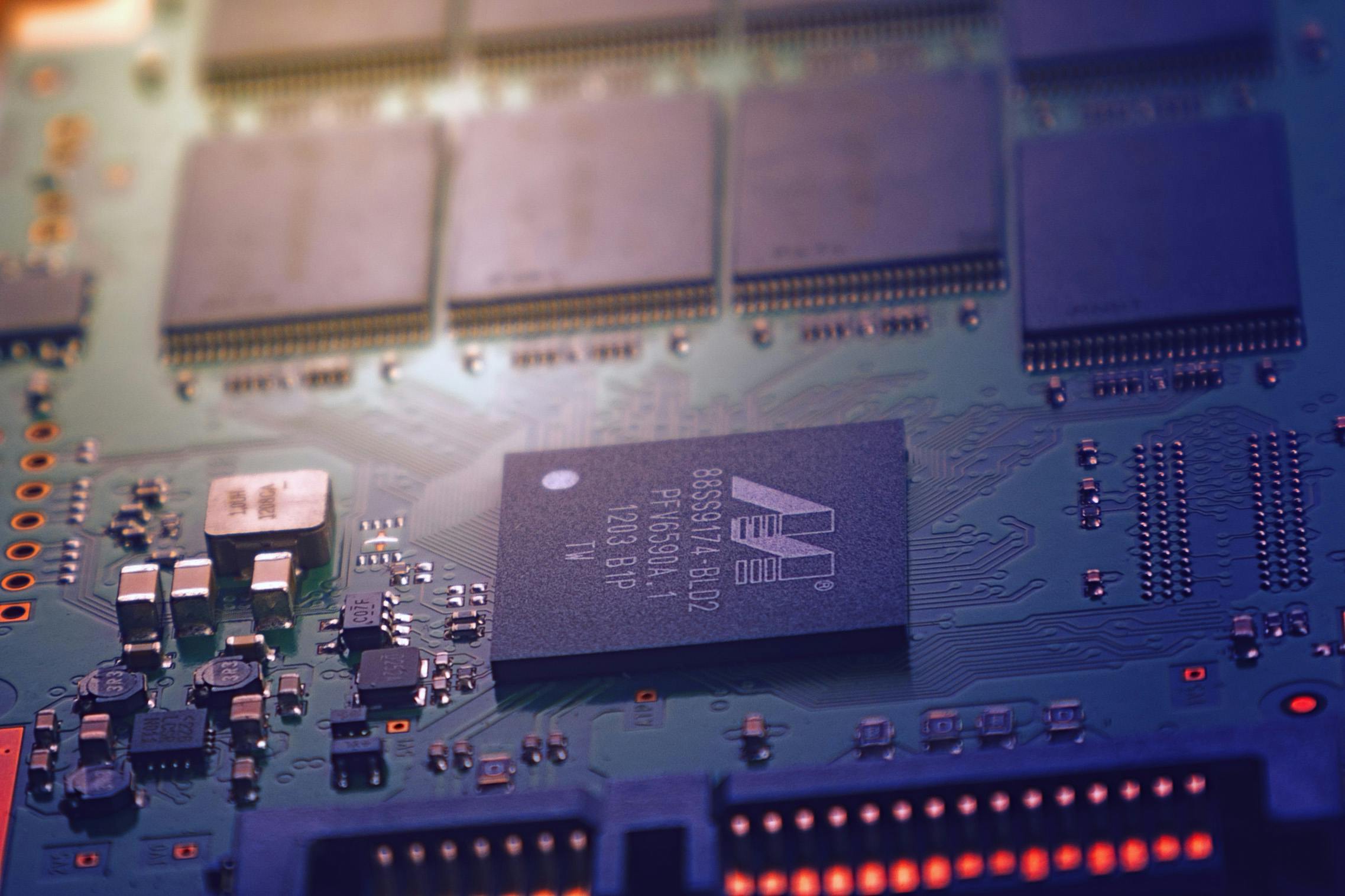
In the era of modern industrial manufacturing, the requirements for material adhesion and microscopic cleaning have become more stringent than ever before. Traditional chemical cleaning methods no longer meet the current high standards for environmental protection and microscopic precision. Instead, the plasma surface treatment machine has emerged as a leading advanced technological solution, perfectly satisfying the most rigorous industry standards. By utilizing high energy to ionize gas, this method not only absolutely eliminates organic impurities but also creates durable chemical bonds. The in-depth article below will provide the most comprehensive perspective on this equipment system, helping engineers and business owners optimize their production lines effectively.
1. What is plasma surface treatment technology, structure, and working principle?
1.1. What is the basic concept of this plasma surface treatment technology?
A plasma cleaner is an advanced industrial system that utilizes the fourth state of matter—plasma—to interact directly with the surface of a material. This highly energetic process helps completely remove microscopic contaminants, while simultaneously altering the surface characteristics without affecting the bulk structural integrity of the base material.
The complex physical and chemical reactions that take place in this ionized environment help significantly increase the surface energy of the substrate. Consequently, this leads to a dramatic improvement in adhesion capabilities for subsequent manufacturing stages, such as high-resolution printing, industrial coating, or structural bonding with adhesives.
1.2. What core components does the machine structure include?
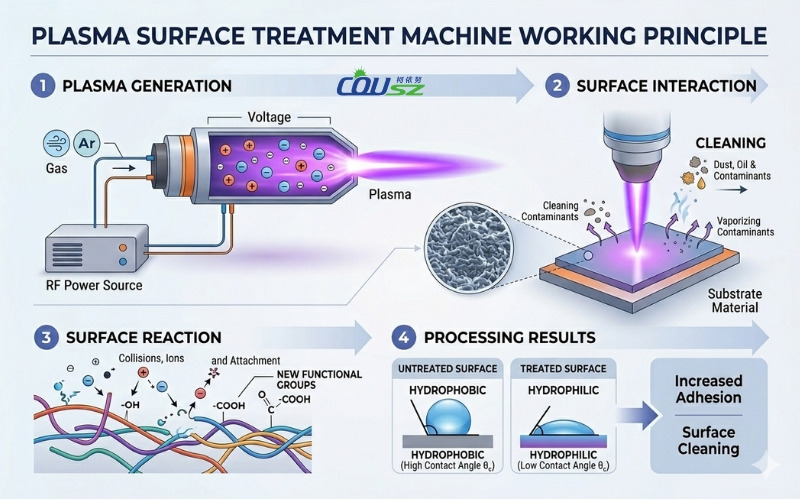
To ensure stable, continuous operation in harsh industrial environments, a standard plasma surface treatment machine is typically constructed from the following core modules:
- High-frequency power supply (RF Generator): This crucial component provides the electromagnetic energy required to excite the precursor gas, generating a stable and continuous plasma stream.
- Reaction chamber or nozzle: Depending on the machine type, this is either a sealed vacuum chamber that houses the material or a specialized directional nozzle that routes the ionized gas stream directly onto the target surface.
- Gas supply and control system: This module precisely manages the input gas flow (such as Argon, Oxygen, Nitrogen, or compressed air) utilizing highly accurate Mass Flow Controllers (MFC).
- Central control system (PLC): The automated brain of the machine, responsible for monitoring and adjusting critical parameters such as output power, vacuum pressure, and cycle timing in real-time.
1.3. How does the surface activation principle at the nanometer level occur?
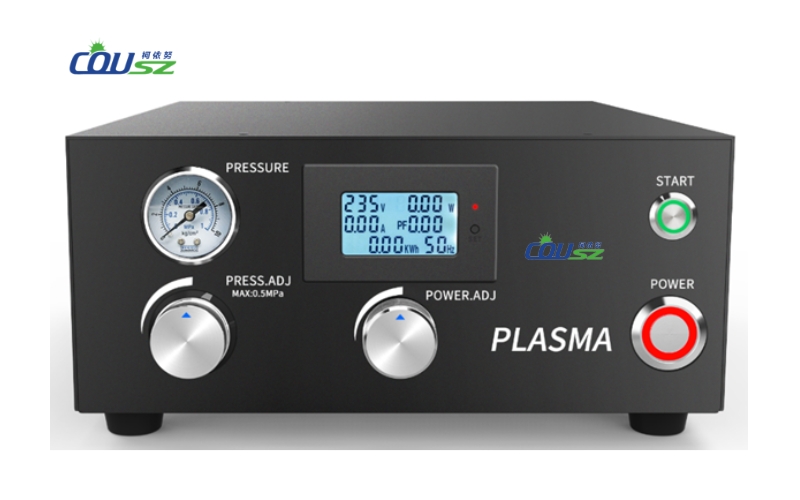
When the selected process gas passes through a powerful electromagnetic field, electrons are forcibly stripped from their parent atoms, creating a highly reactive mixture containing ions, free electrons, and highly energetic free radicals. The surface activation process occurs strictly at the nanometer scale when these energetic particles continuously bombard the outermost molecular layer of the material.
This intense microscopic collision breaks weak carbon bonds and systematically attaches polar functional groups (such as -OH and -COOH). The fundamental principle of wetting and adhesion can be mathematically described by Young’s equation for contact angle:
γs = γsl + γl cos θ
where the goal of the plasma cleaner is to maximize the solid surface energy (γs). As a direct result, the surface fundamentally transitions from a hydrophobic (water-repelling) state to a hydrophilic (water-attracting) state, maximizing surface tension for optimal bonding.
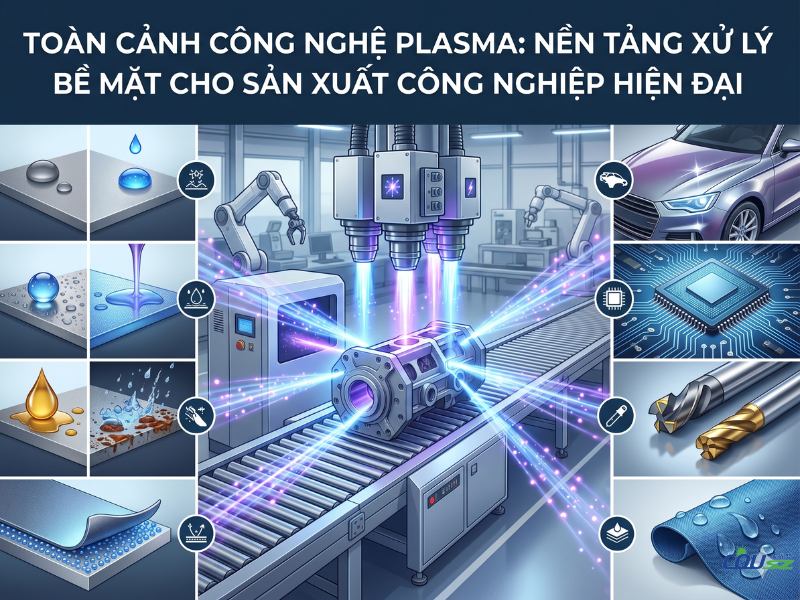
2. What are the top 5 applications of plasma surface treatment technology in manufacturing?
2.1. Electronics and semiconductor microchip industry
In the high-precision manufacturing of PCBs and semiconductor microchips, this cleaning technology is heavily utilized to remove excess epoxy resin (a process known as desmear) and residual soldering flux prior to wire bonding. A plasma cleaner guarantees the prevention of solder voiding, thereby ensuring perfect electrical conductivity and long-term reliability for critical electronic components.
2.2. Automotive manufacturing and mechanical components
Modern vehicles rely on intricate assemblies. Automotive headlight clusters, dashboard displays, and EPDM plastic components require absolute microscopic cleaning prior to adhesive application. The plasma surface treatment machine acts to ensure that adhesives bond with maximum structural integrity, allowing components to easily meet the stringent IP68 waterproofing standards demanded by the global automotive industry.
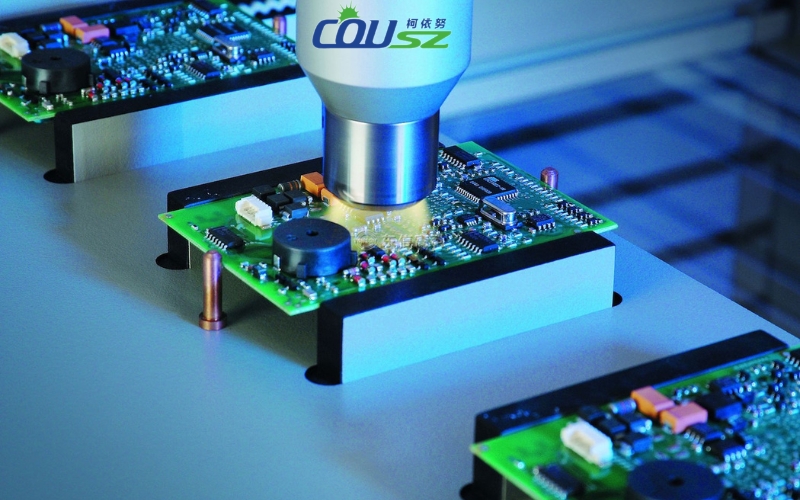
2.3. Medical devices and healthcare sector
For life-saving medical equipment, surface purity is non-negotiable. Catheters, hypodermic needles, and biological implants are frequently activated by plasma surface treatment technology to significantly increase their biocompatibility. Furthermore, the highly reactive free radicals present in the ion stream possess the inherent ability to destroy bacteria at a cellular level, assisting in the complete sterilization of medical devices.
2.4. Packaging printing and polymer film industry
Common industrial polymers like PE and PP films inherently possess very low surface energy, making them notoriously difficult for printing inks to adhere to. By intervening with a polarized gas stream, a plasma surface treatment machine drastically improves the adhesion of UV inks. The resulting print yields crisp, vibrant colors that resist peeling, even under heavy mechanical friction.
2.5. Aerospace and composite materials industry
Fusing lightweight composite panels in aircraft manufacturing demands extremely high mechanical rigidity and structural safety. Plasma surface treatment technology intervenes by using targeted ions to completely eradicate microscopic mold release agents. This pristine cleaning ensures that structural adhesives form a monolithic bond between layers of carbon fiber, capable of withstanding extreme atmospheric stresses.
3. What is vacuum plasma surface treatment technology and its industrial solutions?
3.1. What is the difference of a vacuum environment?
A low-pressure vacuum system operates exclusively within a sealed chamber that is aggressively evacuated to a very low pressure level (typically ranging from 0.1 to 1 Torr). In this near-vacuum environment, the mean free path of the energized ion particles is vastly extended. This lack of atmospheric interference allows the highly reactive ions to penetrate deeply into highly complex, convoluted structures that would be impossible to reach otherwise.
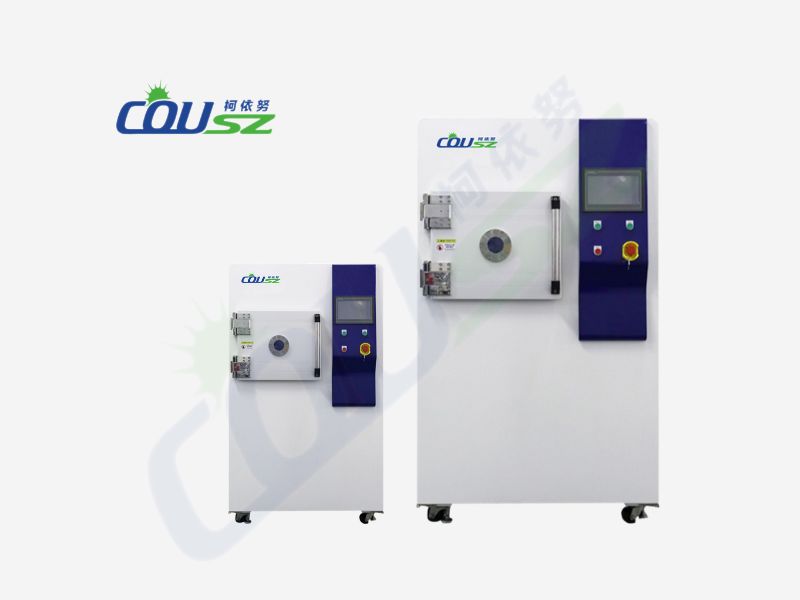
3.2. Optimal solutions for complex 3D block materials
Unlike standard atmospheric air-blown machines that are generally restricted to manipulating flat, two-dimensional surfaces, a vacuum plasma surface treatment machine can flawlessly clean narrow internal spaces, blind holes, or complex 3D structural matrices. Because it prevents cross-contamination, this represents an irreplaceable, absolute solution for strictly controlled cleanrooms dedicated to semiconductor chip manufacturing.
4. How long is the plasma surface treatment time for optimal efficiency?
4.1. What are the decisive factors for cleaning speed?
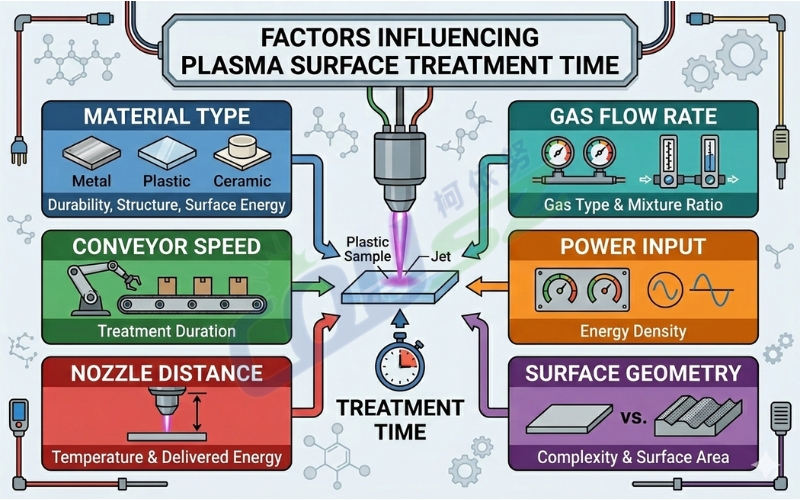
The operational cycle of a plasma cleaner depends heavily on three primary variables: the chemical nature of the base material, the machine’s RF output power, and the specific type of reactive gas being utilized. For instance, when processing ultra-thin plastic films running continuously on high-speed conveyor belts, the necessary exposure time might be calculated in mere milliseconds to achieve full activation.
4.2. Empirical data from scientific research
According to peer-reviewed data published in the prestigious Surface & Coatings Technology journal, applying an activated gas stream to a Polypropylene (PP) film using an output power of 500W requires only 5 to 15 seconds to be fully effective. This brief window is entirely sufficient to elevate the surface tension level from a baseline of 30 mN/m to well over the 72 mN/m threshold required for optimal bonding.
However, engineers must be cautious: if this optimal timeframe is exceeded (a phenomenon known as over-treatment), the delicate polymer chain structure can suffer severe thermal degradation. This induces microscopic cracking and chain scission, which ironically decreases adhesive strength rather than improving it.
5. What are the top 4 popular plasma coating machines today and which to choose?
5.1. Detailed comparison of popular technologies on the market
To successfully optimize capital investment costs, businesses must clearly distinguish the technical characteristics and limitations of each equipment type. Below is a detailed comparison table of the most popular cleaning and activation technologies currently available:
| Evaluation Criteria | Atmospheric Plasma Machine | Vacuum Plasma Machine (Low-pressure) | Corona Treatment Device | Flame Treatment Method |
|---|---|---|---|---|
| Material Characteristics | Flat materials, films, 2D parts | 3D materials, complex blind hole structures | Ultra-thin plastic films, paper webs | Large plastic molds, thick glass bottles |
| Operating Environment | Open free conveyor belt | Strict vacuum sealed chamber | Open free air environment | Safe combustible gas environment |
| Cleaning Level | Very high, no surface damage | Absolute, nanoscale precision | Medium, prone to static electricity | Good but easily causes thermal deformation |
| Integration Capability | Easily mounted on 6-axis robots | Batch process operation | Mounted directly on film extruders | Fixed installation on the production line |
5.2. Expert advice on choosing plasma surface treatment technology
If your manufacturing plant requires high-speed, inline automation integration, the atmospheric plasma cleaner is undoubtedly the number one choice. Conversely, for the strict regulatory demands of the medical or microchip industries, investing in a sealed vacuum chamber system is a mandatory requirement to ensure absolute sterility and prevent any risk of cross-contamination.
6. What does the spare parts checklist for COUSZ plasma surface treatment machine include?
6.1. Why is consumable material management important?
To maintain a demanding 24/7 continuous operation system without encountering a sudden power drop or efficiency loss, monitoring and replacing consumable materials periodically is absolutely urgent. Proactive maintenance directly prevents abnormal electrical arcing, which can easily cause catastrophic fires on the main circuit boards.
6.2. List of supplies to check and replace periodically
Below are the essential components that maintenance technicians must strictly include in their monthly inspection checklist for COUSZ equipment:
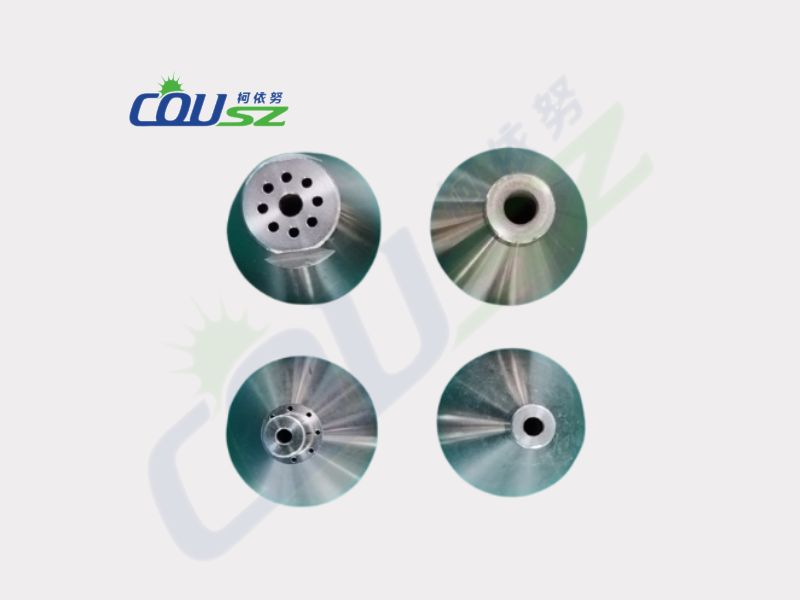
- Nozzle head: As the area enduring the highest temperatures and gas flow friction, it requires rigorous cleaning of debris and oxidation every 500 running hours.
- Central electrode: The heart of the ion generation system. It must be replaced immediately when signs of heavy oxidation or tip beveling are detected.
- High-voltage cable: Technicians must inspect the outer insulation jacket to ensure there are absolutely no cracks, scratches, or dangerous voltage leaks.
- Heat-resistant O-rings: These must be replaced as soon as they lose their natural elasticity to avoid microscopic gas leaks that directly degrade system pressure.
- Air filter: Crucial for ensuring that the input compressed air is entirely dry and free of any oil vapor contamination (complying with the ISO 8573-1 standard).
7. Why is plasma surface treatment efficiency superior to traditional methods?
7.1. Elimination of hazardous chemical risks and wastewater
Traditional industrial washing methods using harsh chemical solvents invariably generate massive quantities of VOCs (Volatile Organic Compounds) and highly toxic wastewater. In stark contrast, utilizing ionized gas via a plasma cleaner is a completely dry process. It leaves absolutely no chemical residue behind, making it exceptionally friendly to the global environment and ensuring the respiratory health of factory workers.
7.2. Outstanding benefits for businesses
Investing in this cutting-edge plasma surface treatment machine yields an incredibly impressive Return on Investment (ROI) driven by the following factors:
- Minimizing adhesive costs: A thoroughly activated surface requires significantly less chemical adhesive, yet routinely delivers a tensile bond strength that is more than 30% stronger than untreated surfaces.
- Eliminating physical abrasion: There is no longer a need for labor-intensive manual sanding, thereby drastically reducing the risk of accidental scratches and product damage.
- Increasing automation productivity: The machine is easily programmed to work in tandem with multi-axis robots, seamlessly processing thousands of intricate parts per hour with 100% uniform quality.
8. What procedures and processes are needed to import a plasma surface treatment machine?
8.1. HS code and current tax policies
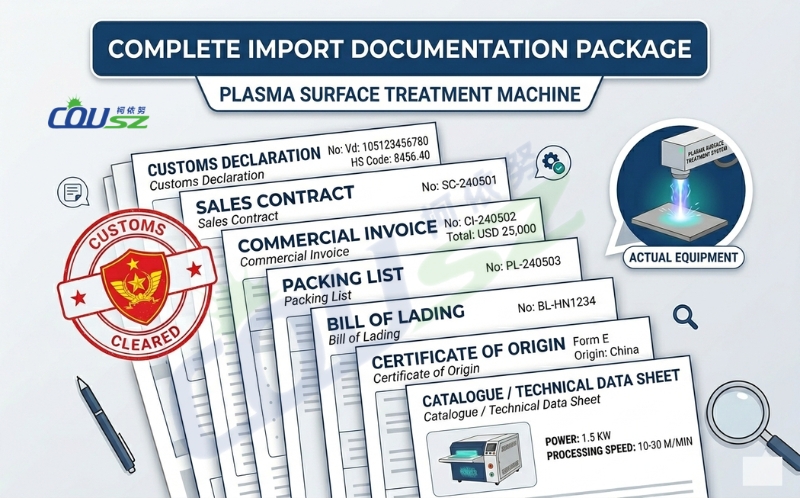
Industrial ion cleaning equipment is generally classified under the HS Code heading 8456 (Machine tools for working any material by removal of material, by laser or other light or photon beam, ultrasonic, electro-discharge, magnetic beam or ion-beam processes). Depending on the exact country of origin, businesses can often enjoy a highly preferential import tax rate of 0% if they possess a valid Certificate of Origin, such as Form E or Form D.
8.2. Customs documentation and COUSZ entrustment service
To guarantee rapid customs clearance at the border, the mandatory documentation dossier must comprehensively include: the Sale Contract, Commercial Invoice, Packing List, Bill of Lading, and Quality Certificates (CQ). Currently, COUSZ Vietnam proudly supports a comprehensive, all-inclusive service package covering customs clearance, domestic transportation logistics, and on-site factory installation for all esteemed customers.
9. What are the frequently asked questions about COUSZ brand plasma cleaners?
9.1. Is plasma surface treatment technology easy to integrate into existing lines?
It is completely easy and seamless. COUSZ equipment lines are inherently equipped with standard industrial communication protocols (such as RS485 and digital I/O interfaces). This allows for smooth, error-free signal synchronization with existing conveyor belts and robotic arms already present in the factory, requiring absolutely no expensive infrastructure modifications.
9.2. Are the power and compressed air consumption costs of plasma surface treatment technology expensive?
Not at all. Our proprietary RF power modules utilize advanced Inverter technology, which actively helps save up to 40% in electrical consumption compared to older, legacy technologies. The gas utilized is predominantly standard factory Clean Dry Air (CDA), meaning that the monthly operational overhead costs are optimized to an extremely low, highly competitive level.
Plasma Cleaning Technology: Advancements and Industrial Trends
Plasma cleaning technology is a high-precision surface treatment process that utilizes ionized gas (plasma) to remove microscopic contaminants from material surfaces. By bombarding the surface with energetic ions, electrons, and free radicals, it effectively eliminates organic matter, oxides, and particulates.
Why Modern Manufacturing is Shifting to Plasma
- Eco-Friendly Alternative: It eliminates the need for harsh chemical solvents, aligning with global “Green Manufacturing” initiatives.
- Enhanced Surface Energy: Beyond cleaning, it significantly improves surface hydrophilicity and adhesion properties, which is critical for printing, gluing, and coating processes.
- Uniformity and Precision: Modern plasma systems ensure high uniformity during the treatment process, preventing localized damage often seen in traditional mechanical or thermal cleaning.
- Automation Integration: New trends focus on integrating plasma systems directly into automated production lines to increase throughput and reduce labor costs.
Read more:
What is plasma cleaning technology? New trends in modern industrial manufacturing
Note: Plasma cleaning is increasingly becoming a standard requirement for high-tech industries, including semiconductors, automotive components, and advanced packaging.
To receive the official Plasma Surface Treatment Technology User Manual and to get expert consultation on the most suitable measurement machines for your specific enterprise, please contact us immediately:
- 👤 Ms. Yuna
- ✨ Technical Specialist – COUSZ Vietnam
- 📞 Tel/Whatsapp/Wechat/Zalo: (84) 965 535 348
- 📧 Email: sales03@cousz.com
- 🌐 Website: www.cousz-vn.com