中文 (中国)
 Tiếng Việt
 한국어
한국어
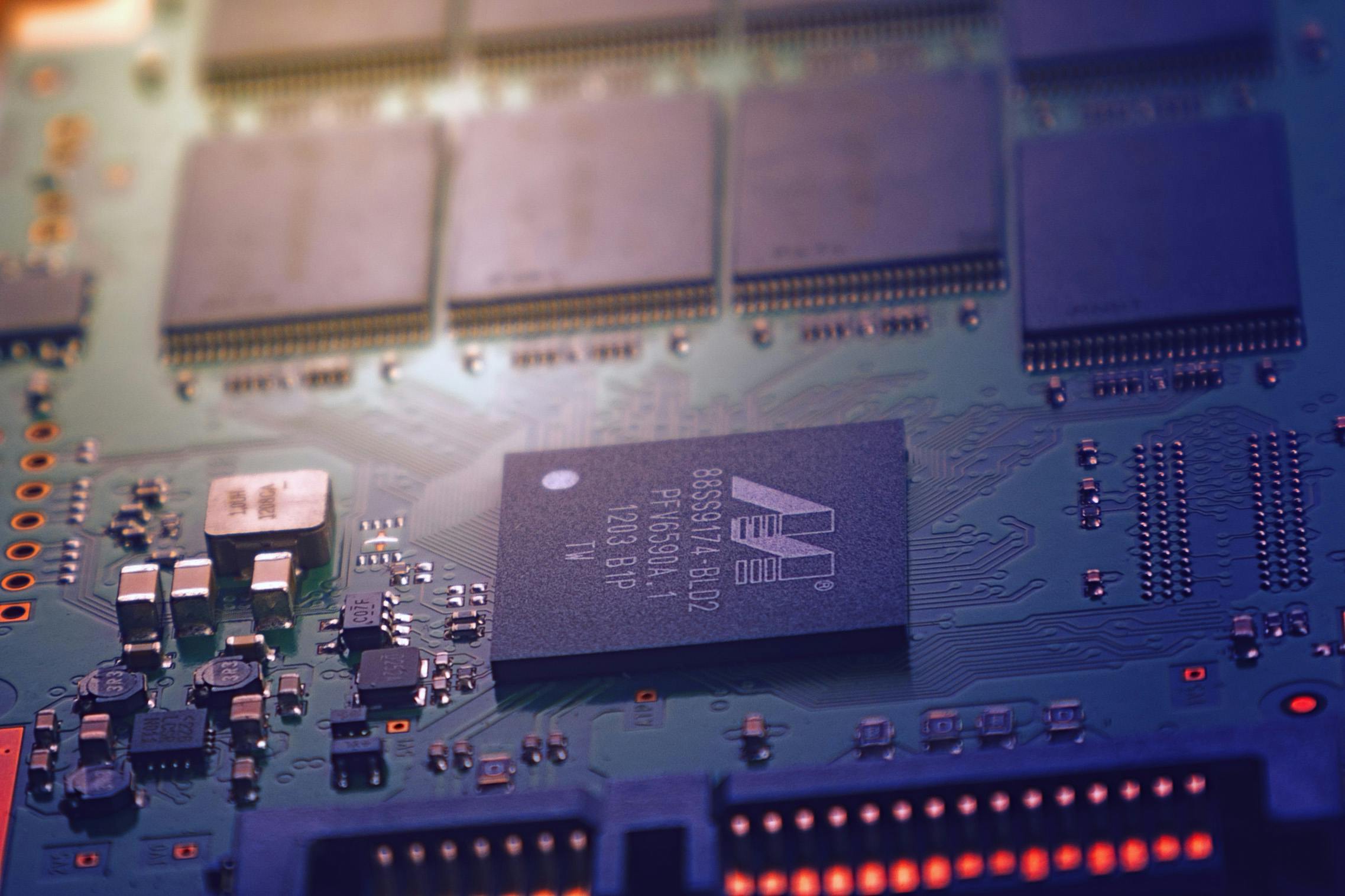
In the high-end surface treatment segment, a vacuum plasma system is widely considered the absolute “peak” of precision, reliability, and material safety. Unlike direct atmospheric blown-arc machines, this low-pressure solution allows the highly energized plasma to penetrate and act upon every microscopic corner of the most complex, three-dimensional components. This comprehensive article will deeply analyze exactly why vacuum plasma treatment is the top choice for the semiconductor, medical, and electronics industries, helping enterprise leaders elevate product quality through COUSZ’s specialized plasma equipment portfolio.
1. What is a vacuum plasma system technology?
1.1. The peak of precision in surface treatment
Fundamentally, a vacuum plasma system utilizes highly concentrated electrical energy to ionize specialized process gases (such as high-purity Oxygen, Argon, or Nitrogen) strictly within a controlled, low-pressure environment. Because the atmospheric pressure is artificially reduced to a near-vacuum state, the generated plasma particles possess a vastly extended mean free path. This allows them to move freely and seamlessly generate a uniform, homogeneous energy field that entirely envelops the product placed inside the treatment chamber.
The resulting plasma beam is a stream of ionized gas in a state of extreme energy. This is achieved when standard gases are stimulated by a high-voltage electrical field or high-frequency radio waves. During this intense excitation, the stable gas molecules are violently split into positive ions, free electrons, and highly reactive neutral radicals, ultimately forming the fourth state of matter—plasma.
This is not merely a conventional macroscopic washing method; it is a vacuum plasma cleaning system operating strictly at the molecular level. According to in-depth research published in the esteemed Journal of Vacuum Science & Technology, processing materials in a vacuum environment allows engineers to exert extreme control over the ion density. This precise control effortlessly eradicates stubborn metal oxides and persistent organic impurities without requiring any toxic liquid chemical intervention. Consequently, this elevates the vacuum plasma cleaner into an indispensable, core asset for internationally certified cleanrooms.
2. What is the working principle of a vacuum plasma treatment system?
2.1. The strict closed-loop processing cycle
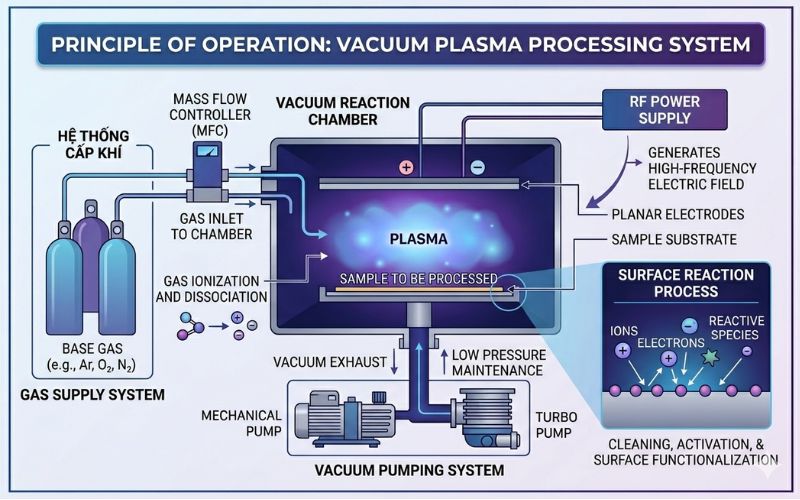
The operational workflow of a vacuum plasma treatment system operates on a highly strict, fully automated, and closed-loop cycle to guarantee absolute repeatability across thousands of batches. The process unfolds in four distinct stages:
- Vacuum extraction: The products are carefully loaded into the sealed chamber. A heavy-duty industrial vacuum pump aggressively extracts the ambient atmospheric air until the precise target pressure is achieved (typically ranging from 10-1 to 10-3 mbar).
- Process gas injection: Once the baseline vacuum is reached, specific process gases are carefully injected into the chamber. Under the intense influence of the high-frequency RF power supply, these gas molecules are forcefully split into a glowing cloud of electrons and active ions.
- Surface interaction: These high-energy plasma particles continuously collide and chemically react with the material’s surface. This is the exact moment the vacuum plasma cleaning machine demonstrates its power by “breaking” the strong hydrocarbon bonds of contaminants, converting them into volatile gases that are immediately sucked out by the pump.
- Completion and venting: Finally, the RF power is deactivated, and the chamber is slowly vented with clean air to return to normal atmospheric pressure before the pristine products are safely removed.
3. What is the basic structure of a vacuum plasma cleaning machine?
3.1. Core precision mechanical sub-systems
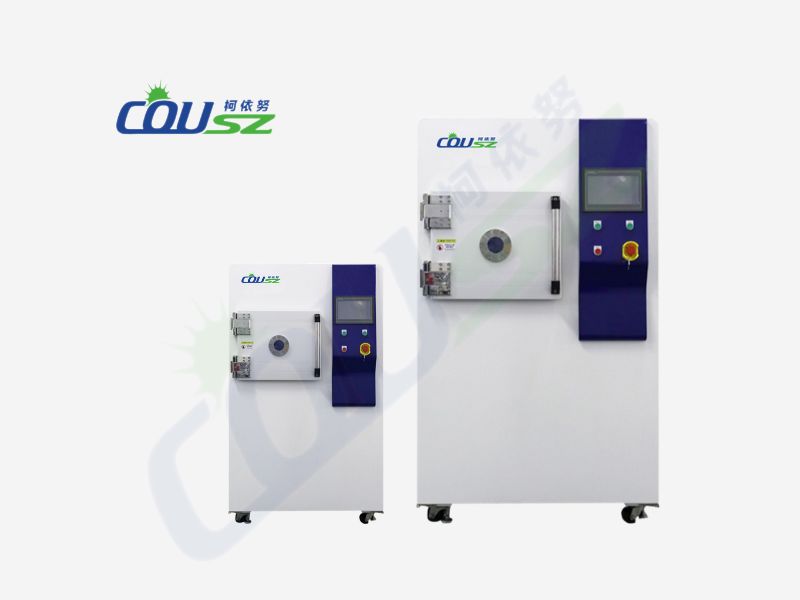
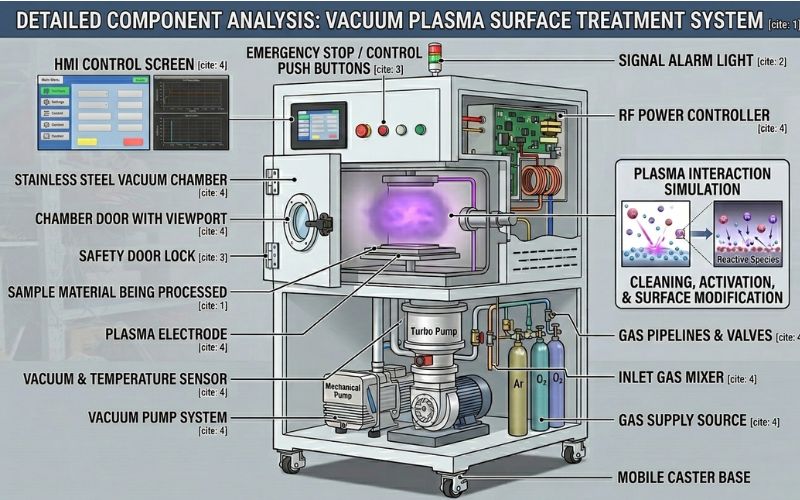
A complete, industrial-grade vacuum plasma system is a highly complex integration of multiple precision mechanical and electrical sub-systems designed for 24/7 continuous operation. The core architecture includes:
- Vacuum chamber: This robust enclosure is typically constructed from high-grade stainless steel, aerospace aluminum, or heavy-duty quartz glass. It serves as the isolated arena where the entire chemical reaction takes place safely.
- Vacuum pump: The mechanical workhorse of the system. Its capacity directly dictates both the speed (pump-down time) and the ultimate depth of the vacuum environment achievable.
- RF generator: The high-frequency power supply (often operating at 13.56 MHz or 40 kHz) that delivers the massive energy required to ignite and sustainably maintain a stable plasma state.
- Mass flow controller (MFC): A highly calibrated digital valve system that ensures the ratio of the injected precursor gases remains absolutely precise down to the milliliter.
Successfully operating a vacuum plasma cleaning machine requires flawless, real-time synchronization between the proprietary control software and the internal pressure sensors. This digital handshake ensures that every single batch yields the exact same high-quality treatment results, preventing costly manufacturing defects.
4. What are the outstanding advantages over other plasma technologies?
4.1. Ultra-low treatment temperature
Why do massive global manufacturing plants actively shift from standard atmospheric plasma jets to a dedicated vacuum plasma system for their most delicate components? The answer lies in thermal dynamics. Unlike atmospheric plasma, which can occasionally generate localized heat at the nozzle tip, a vacuum plasma treatment system operates strictly in a “cold plasma” state.
Because the particles exist at such a low pressure, they possess a much longer mean free path. This drastically reduces the frequency of kinetic particle collisions that generate high thermal energy. This unique low-temperature characteristic strictly protects ultra-thin polymer parts, sensitive biological membranes, and delicate PCBs from suffering any thermal warping, melting, or structural degradation.
4.2. Treating complex 3D structures and sensitive materials
For intricately engineered components featuring deep blind holes, narrow crevices, micro-channels, or highly complex 3D topographies, only a vacuum plasma chamber can guarantee successful penetration. In a vacuum, the plasma gas diffuses uniformly, weaving into every single hidden contour. This ensures the surface is activated evenly, 360 degrees around the part—a feat that standard, directional atmospheric plasma nozzles simply cannot execute perfectly.
| Comparison Criteria | Vacuum Plasma System | Atmospheric Plasma Jet |
|---|---|---|
| Operating Pressure | Low-pressure (Near vacuum) | Standard atmospheric pressure |
| Treatment Geometry | Complex 3D parts, blind holes, 360-degree coverage | Flat surfaces, 2D profiles, localized strips |
| Processing Method | Batch processing (Chamber based) | High-speed inline continuous (Conveyor based) |
| Temperature Profile | Ultra-low (Cold plasma), safe for heat-sensitive items | Moderate to warm, requires careful speed control |
5. What are the practical applications of a vacuum plasma cleaning system?
5.1. Medical, electronics, and specialized textiles
Going far beyond merely eradicating dirt, advanced vacuum plasma treatment technology unlocks the incredible ability to deposit specialized, highly functional nano-coatings across multiple industries:
- Medical sector: A vacuum plasma system is heavily utilized to deposit anti-microbial coatings or drastically increase the biocompatibility of titanium bone screws, joint implants, and cardiovascular catheters before they enter the human body.
- Electronics sector: Meticulously processing silicon semiconductor chips, micro-sensors, and intricate PCBs to vastly improve the chemical adhesion of protective potting compounds and conformal coatings.
- Technical textiles: Vacuum plasma technology allows engineers to deposit ultra-thin, super-hydrophobic (water-repellent) nano-films onto individual fabric fibers without altering the material’s natural softness or breathability.
- Optics industry: Utilizing a vacuum plasma cleaner to aggressively treat camera lenses and optical glass, ensuring that Anti-Reflective (AR) coatings bond permanently and endure heavy physical abrasion exponentially longer.
6. When should enterprises choose vacuum plasma treatment?
6.1. Ensuring consistency and high purity for exports
The strategic decision to invest in a vacuum plasma system generally relies on two critical manufacturing criteria: the required purity level and the geometric complexity of the product. If your enterprise is manufacturing implantable medical devices, delicate microelectronics, or parts with highly irregular, convex, and concave shapes, then vacuum plasma treatment is unequivocally the only viable choice to guarantee processing consistency.
According to extensive laboratory research published by Professor Peter J. Szabó, deploying a vacuum plasma cleaner successfully increased the overall lifespan of protective coatings on Titanium alloys by an astonishing 200%. This massive leap in durability provides a colossal competitive advantage for export-oriented enterprises aiming to meet the ruthlessly strict quality standards of the European and North American markets.
7. What to keep in mind when investing in a vacuum plasma chamber?
7.1. Key selection criteria for optimal ROI
When actively sourcing and purchasing a vacuum plasma cleaning machine, business owners and factory engineers must carefully evaluate several critical technical parameters:
- Chamber size and volume: The internal dimensions must perfectly align with your factory’s daily output volume and the physical size of your largest product to optimally conserve electrical power and process gas.
- Vacuum depth and pump capacity: Depending entirely on the specific material (porous plastics vs. dense metals), you must select a heavy-duty rotary vane or dry pump with the appropriate extraction capacity.
- Automation integration: Modern factories require systems equipped with digital I/O and standard communication protocols to seamlessly interface with existing factory manufacturing execution systems (MES).
Acquiring a high-end vacuum plasma system is a strategic, long-term capital investment. A premium, highly reliable machine not only drives up factory productivity but systematically eradicates the massive financial risks associated with catastrophic product failures caused by poor adhesion.
8. FAQs – Frequently asked questions
8.1. What is the fundamental difference between a vacuum plasma system and atmospheric plasma?
The absolute core difference lies in the operating environment. Vacuum plasma occurs strictly inside a sealed, low-pressure chamber, providing flawlessly uniform 360-degree treatment over highly complex shapes at incredibly low temperatures. Conversely, atmospheric plasma jets blow directly into open air, making them far better suited for flat, 2D surfaces running on ultra-high-speed conveyor belts.
8.2. How long does the processing time take inside the vacuum chamber?
Depending entirely on the chemical nature of the material and the desired activation level, a standard processing cycle (which fully encompasses vacuum extraction, gas injection, plasma ignition, and venting) generally lasts from 2 to 10 minutes. However, because it is a batch process, a single large chamber can effortlessly treat hundreds or thousands of small micro-components simultaneously within that timeframe.
8.3. Why is this solution called perfect for “sensitive materials”?
Because within the rarefied vacuum environment, the density of particle collisions is exceptionally low. This physical phenomenon actively prevents the buildup of thermal energy, maintaining the internal chamber temperature at a very low baseline (typically under 50°C). This entirely prevents the melting, thermal warping, or structural denaturation of plastics with low heat resistance or highly delicate biological membranes.
9. Technical consultation and support
If your manufacturing facility requires a bespoke, custom-engineered vacuum plasma system perfectly tailored to your unique product geometry and production volume, please do not hesitate to contact our engineering team immediately:
- 👤 Ms. Yuna – Technical Specialist & Plasma Solutions Expert
- 📞 Tel/Whatsapp/Wechat/Zalo: (84) 965 535 348
- 📧 Email: sales03@cousz.com
- 🌐 Website: www.cousz-vn.com