中文 (中国)
 Tiếng Việt
 한국어
한국어
Plasma, also known as the fourth state of matter, has been revolutionizing many industries. However, when generated in a low-pressure environment, it becomes a powerful technology with breakthrough applications that we call a vacuum plasma machine. In this article, we will delve into what a vacuum plasma machine is, how it works, and the outstanding benefits it offers.
1. What is a Vacuum Plasma System?
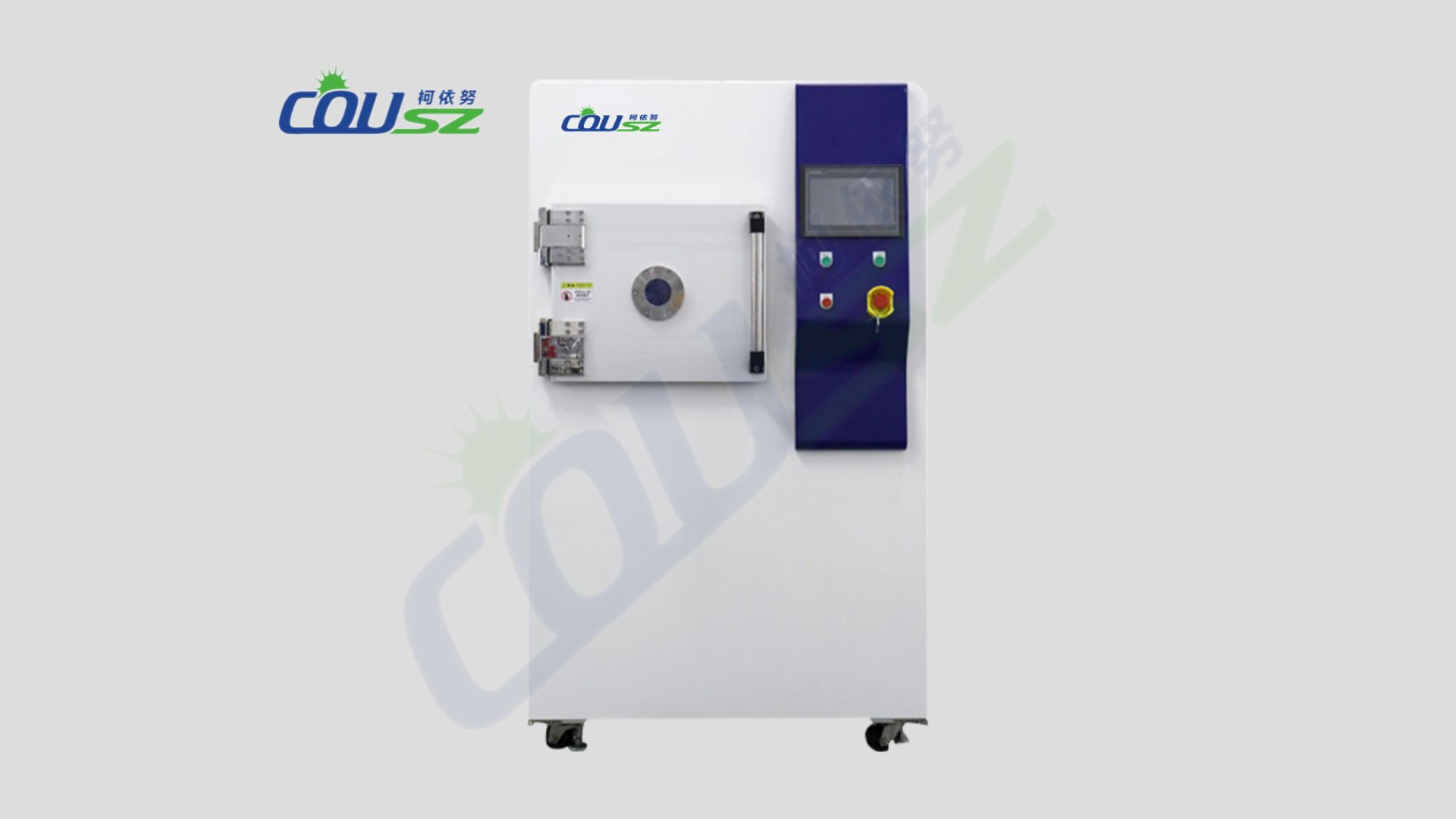
Essentially, a vacuum plasma machine is an industrial device designed to generate and maintain a plasma state in a sealed chamber at a pressure much lower than atmospheric pressure. The goal of this equipment is to harness the unique properties of plasma to perform complex surface treatment processes efficiently and accurately.
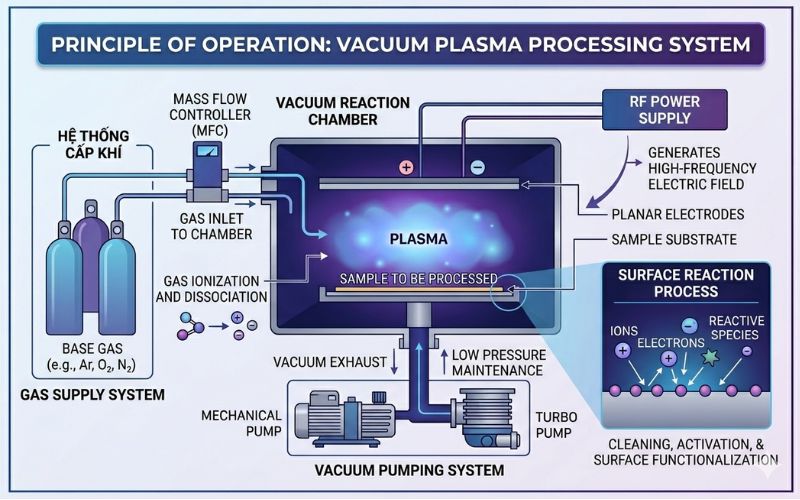
The basic structure of a vacuum plasma machine includes a vacuum chamber, a vacuum pump system, gas inlet valves, and a high-frequency power supply to activate the plasma. Each component is designed to ensure a stable processing environment tailored to the requirements of specific applications.
2. Classification of Vacuum Plasma Machines
Depending on the production scale and material type, vacuum plasma systems can be classified into three main types, each with its own advantages.
- Batch Plasma Systems: This is the most common type, used to process a large volume of materials simultaneously. Materials are placed in the chamber, and the entire process is performed in a single cycle. Batch systems are suitable for applications requiring flexibility, small-scale production, or processing parts with complex shapes. They allow for tight control over each product batch and easy switching between different processes.
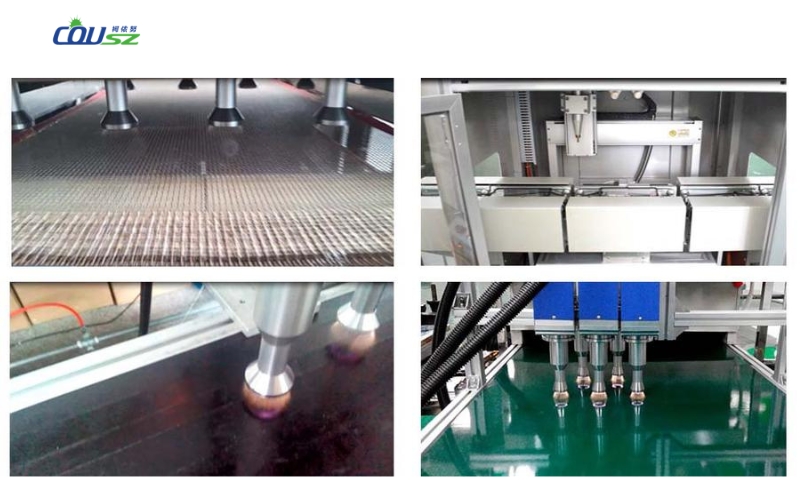
- Inline Plasma Systems: In contrast to Batch systems, Inline systems are integrated directly into automated production lines. Materials move continuously through the plasma chamber, where they are treated instantly. This type of system is ideal for mass production, where high speed and throughput are required. They optimize the process, minimize wait times, and enhance the overall efficiency of the line.
- Strip Plasma Systems: This is a specialized version of Inline systems, specifically designed to process materials in strip or roll form, such as fabrics, plastic films, or thin metal strips. This system ensures uniform and efficient treatment across the entire length of the material, commonly applied in the textile or electronic component manufacturing industries.
3. Operating Principle of a Vacuum Plasma Machine
The treatment process using a vacuum plasma machine consists of four main steps, performed sequentially to ensure maximum efficiency.
- Step 1: Material Preparation: First, the parts to be treated are placed into the machine’s vacuum chamber. The arrangement of materials must ensure optimal surface exposure to the plasma, without being shielded or obstructed.
- Step 2: Vacuum Pumping: The plasma chamber will be evacuated of air. Creating a vacuum environment is crucial because it removes unwanted gas molecules (like Nitrogen and Oxygen in the air) that could cause side reactions or reduce the plasma’s effectiveness. The ideal vacuum level is usually very low, allowing the plasma to operate most stably and efficiently.
- Step 3: Process Gas Introduction: After reaching the desired vacuum level, a small amount of process gas (such as Argon, Oxygen, or Hydrogen) is introduced into the chamber. The choice of gas depends on the goal of the process. For example, Argon is often used for physical cleaning, while Oxygen is effective in removing organic impurities.
- Step 4: Plasma Activation: This is the most important step. A high-frequency power source (usually RF) is supplied to the chamber, creating a strong electric field. This electric field ionizes the process gas molecules, turning them into plasma – a mixture of ions, free electrons, and high-energy free radicals. This mixture will impact the material’s surface, performing cleaning, activation, or coating processes.
4. Outstanding Advantages of Vacuum Plasma Machines
The use of vacuum plasma surface treatment technology brings many significant benefits compared to traditional surface treatment methods.
- High efficiency and thorough cleaning: Plasma technology is capable of cleaning surfaces at the molecular level, removing organic and inorganic impurities that are difficult to reach with mechanical or chemical methods. This efficiency ensures the material surface is best prepared for subsequent processes.
- Safe and environmentally friendly: One of the biggest advantages of a vacuum plasma machine is that it does not use toxic solvents or chemicals. This is a dry process that generates no liquid waste, significantly reducing environmental impact and ensuring safety for workers.
- Precision and non-alteration of original material properties: Because plasma only affects the thin surface layer, it does not alter the physical, structural, or mechanical properties of the bulk material. This is especially important for sensitive materials or electronic components.
- Broad compatibility and flexibility: Vacuum plasma technology can process almost any type of material, from metals, ceramics, and glass to complex polymers and composites. It also has the ability to uniformly treat parts with irregular shapes.
5. Common Applications of Vacuum Plasma Machines
Vacuum plasma technology is widely applied in many fields, from manufacturing to research.
5.1. Surface cleaning with Vacuum Plasma
Vacuum plasma surface treatment is an effective process for removing organic impurities (oil, grease, mold release agents) and thin oxide layers from material surfaces. This process operates based on two mechanisms:
-
- Physical cleaning: High-energy ions in the plasma collide with the surface, breaking the bonds of impurities and helping them vaporize from the surface.
- Chemical cleaning: Highly reactive free radicals in the plasma attack and destroy the chemical structure of organic impurities, turning them into smaller gas molecules that are easily extracted. This is the most basic yet extremely important application to ensure quality for subsequent processes like gluing, soldering, or coating.
5.2. Enhancing adhesion and surface bonding
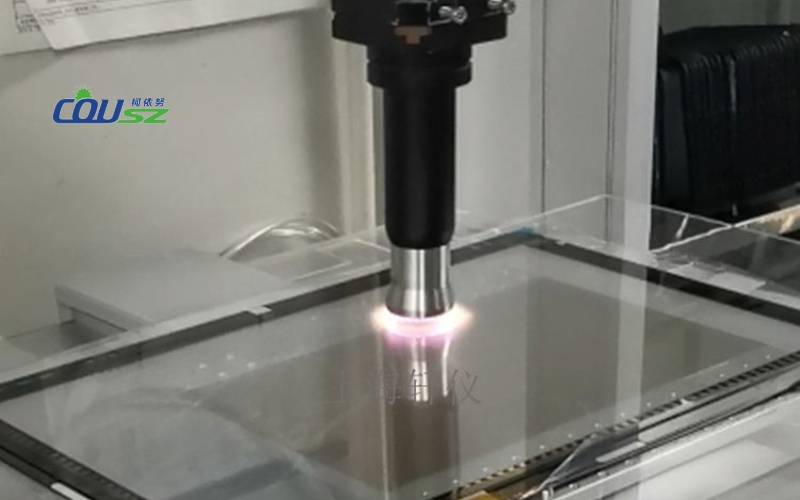
Many materials, especially polymers, have low surface energy, making them difficult to bond or glue with other materials. A vacuum plasma machine can solve this problem thoroughly.
-
- Mechanism: Plasma modifies the material surface by adding active chemical functional groups (such as -OH, -COOH, -NH2). This process is called “functionalization”.
- Result: These new functional groups create strong bonding points with adhesives or coatings, thereby significantly improving adhesion. This technology is widely used in the automotive, electronics, and packaging industries.
5.3. Polymer Coating with Vacuum Plasma (Plasma Polymerization)
This is an advanced process that allows the creation of a thin, uniform, and highly adhesive polymer film right inside the vacuum chamber.
-
- Mechanism: A monomer gas (e.g., C2H4) is fed into the chamber and activated by plasma. These monomers react with each other to form long polymer chains, depositing onto the material surface to be coated.
- Benefits: This process takes place in a clean, solvent-free environment. The resulting polymer film can have special properties such as superhydrophobic (waterproof), superoleophobic, or anti-corrosion. Adhesion is extremely strong because the surface activation and coating processes occur simultaneously.
6. Other Applied Industries
- Textiles: This technology is used to treat fabric fiber surfaces, improving waterproofing, stain resistance, or enhancing dye adhesion.
- Aerospace: Components in the aerospace industry require high adhesion for protective coatings. Vacuum plasma machines are used for surface preparation, ensuring the coating’s durability in harsh conditions.
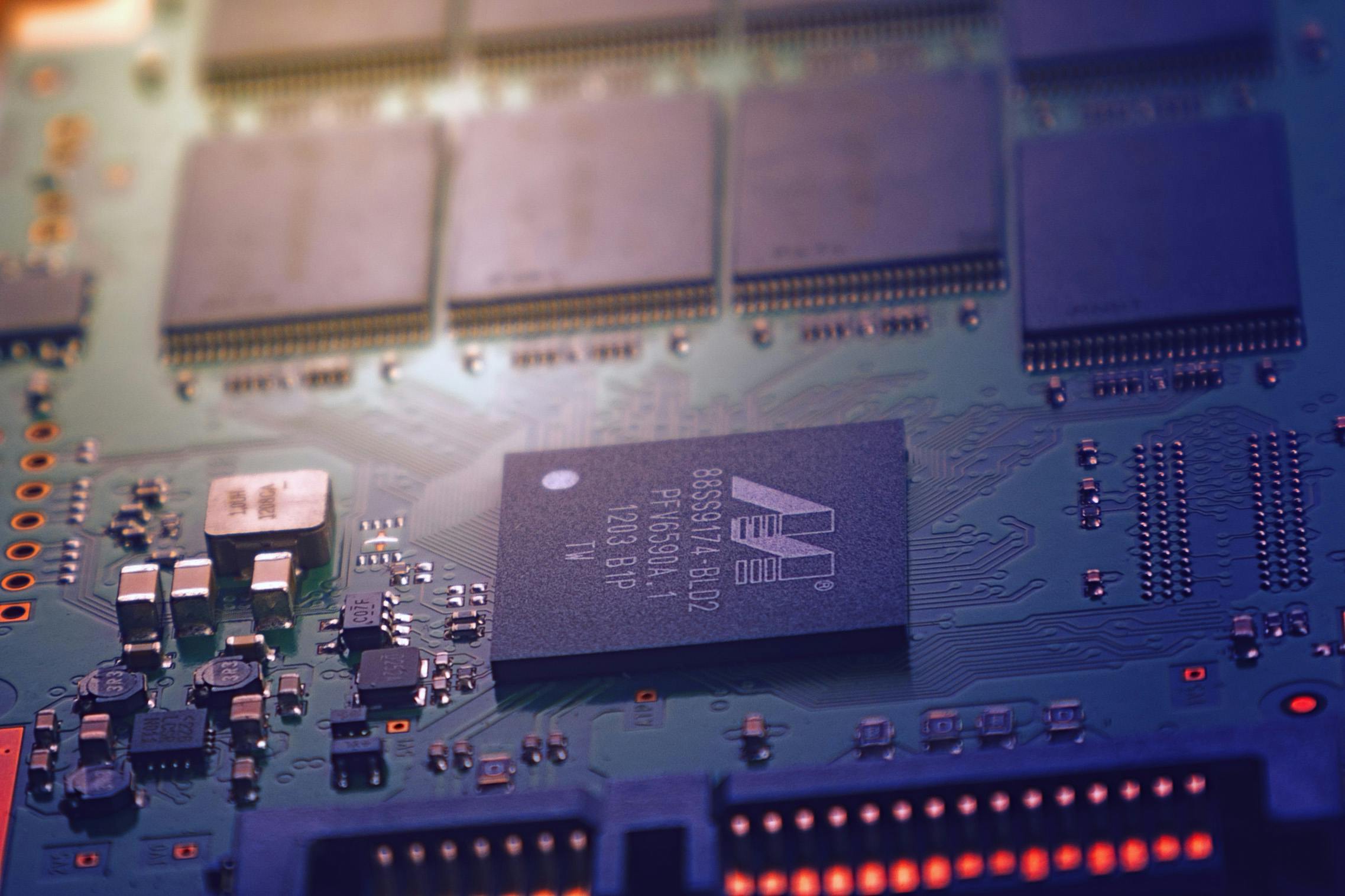
- Electronics: In microchip and electronic component manufacturing, vacuum plasma machines are used to etch thin material layers with nanometer precision, clean PCB boards, and apply protective coatings to electronic chips.

- Battery Manufacturing: In the battery manufacturing industry, especially lithium-ion batteries, plasma is used to clean electrodes and separators, improving battery performance and lifespan.
7. Why choose COUSZ brand Vacuum Plasma Machines?
The COUSZ brand has affirmed its position in the market with high-quality Plasma coating machines, optimal designs, and competitive prices. Some highlights include:
- Stable quality, high durability
- Free consultation on machine selection, tailored to actual production needs
- Clear warranty, fast technical support
Do not hesitate to contact us today to receive a free technical consultation and a special quote from our team of experts.
 Hotline: 0965 535 348 – 0964 039 248 (Ms. Yuna / Ms. Hina)
 Email: sales03@cousz.com
 Website: https://cousz-vn.com/