中文 (中国)
 Tiếng Việt
 한국어
한국어

1. Introduction to the f250 power and energy meter
The F250 is not merely a standard energy dosimeter. It is a highly integrated, multi-functional device explicitly designed to meticulously monitor the most critical variables of ultraviolet light sources. By adhering to the precise protocols outlined in this F250 UV Tester operation guide, businesses can transform their raw measurement data into actionable quality control insights.
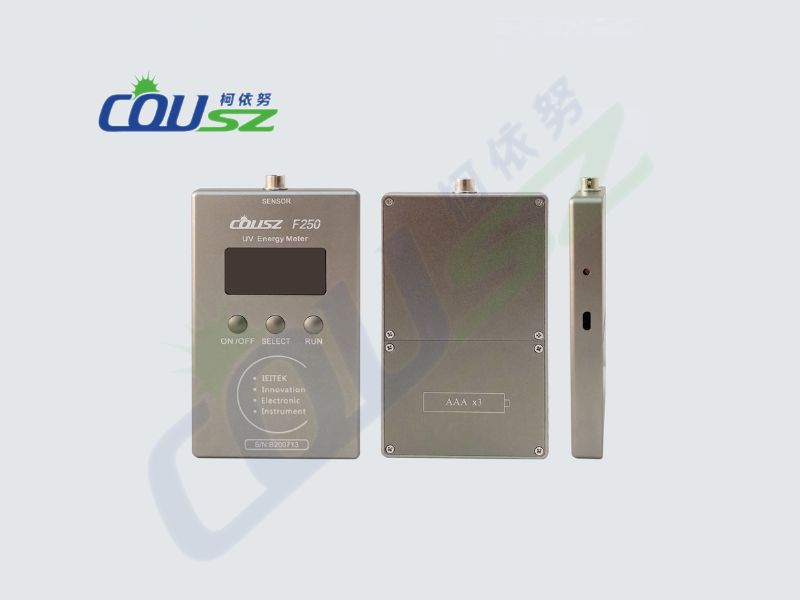
Why is the f250 a reliable quality gatekeeper?
According to optical radiation measurement standards set by NIST (National Institute of Standards and Technology), maintaining stringent metrological control is mandatory to ensure absolute accuracy. For modern LED systems—which are notoriously sensitive to temperature fluctuations and intensity degradation—the F250 acts as an incredibly reliable “gatekeeper.”
The most significant differentiator that leads many engineers to actively seek out the F250 UV Tester operation guide is its advanced capability to measure temperature parameters concurrently with peak brightness. This dual-monitoring feature helps enterprises actively prevent thermal overload within the drying system, completely avoiding material surface deformation and severe degradation of expensive LED chips. The F250 supports a diverse array of optical wavebands, ranging from traditional UVA, UVB, and UVC to highly specialized LED bands like UVV and UVX.
2. Detailed technical specifications of the f250 device
Deeply understanding the technical specifications is an inseparable component of mastering any piece of industrial metrology equipment. The F250 possesses highly impressive technical characteristics that make it perfectly suitable for both rigorous laboratory research and large-scale, high-speed commercial production.
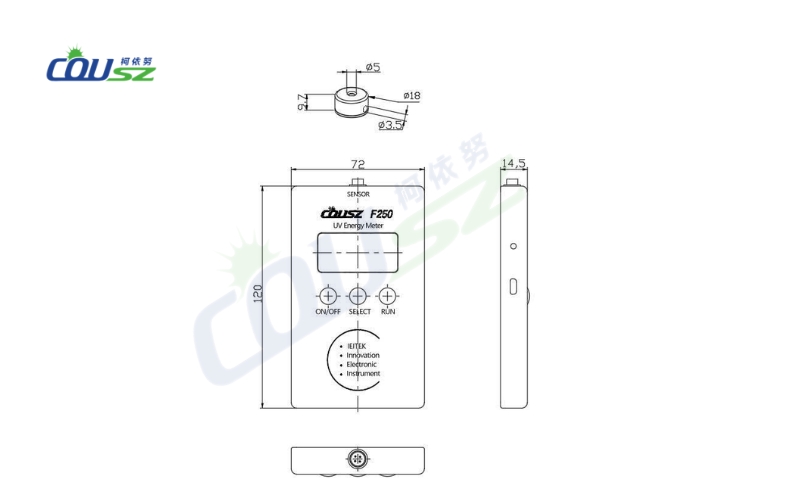
Analyzing the wavelength ranges and physical limits
Before you learn how to properly measure UV energy, you must understand the exact physical capabilities of the hardware. The device is categorized into 5 specific models based on the targeted spectral response:
- UVA (365nm): The standard for traditional printing inks and industrial adhesives.
- UVV (405nm): Specialized for high-power LED curing systems.
- UVB (320nm): Widely applied in medical treatments and material degradation testing.
- UVC (254nm): The dominant spectrum for surface sterilization and germicidal processing.
- UVX (450nm): A unique blue-light band utilized in novel emerging industrial applications.
| Technical Parameter | Detailed Specification Value |
|---|---|
| Power Measurement Range | 0 – 10,000 mW/cm² |
| Energy Measurement Range | 0 – 999,999 mJ/cm² |
| Measurement Accuracy | Typically ±5%, maximum allowable error strictly under ±10%. |
| Temperature Range | Extremely broad, from -55°C to 125°C. |
| Sampling Rate Frequency | 100Hz (Guarantees no instantaneous micro-fluctuations are missed). |
| Power Supply | Utilizes 3 highly accessible and easily replaceable AAA batteries. |
Weighing a mere 200 grams with a highly compact body (126mm × 72mm × 16mm), the instrument provides maximum flexibility for operators executing the F250 UV Tester operation guide within the extremely tight and confined spaces of industrial conveyor ovens.
3. Step-by-step f250 uv tester operation guide for precise results
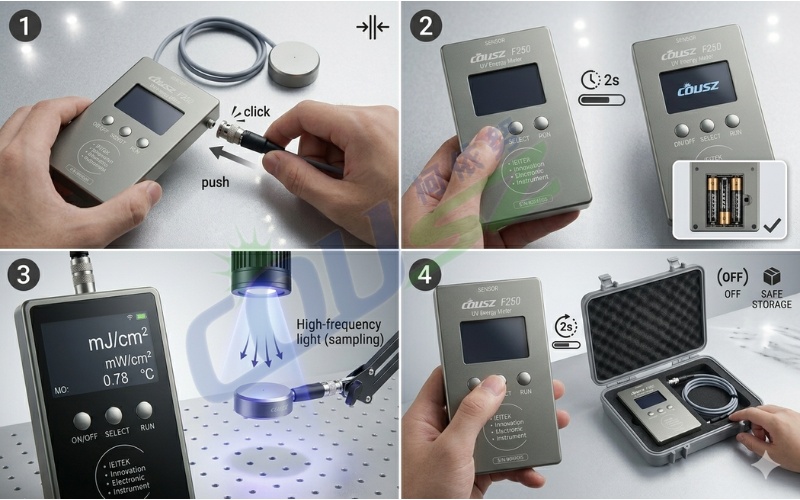
To ensure the machine operates flawlessly and yields highly reliable scientific data, technicians must strictly adhere to the following 4-step operational procedure. Skipping any of these steps can compromise your UV intensity measurement data and lead to false conclusions regarding your curing system’s health.
Executing the four critical operational steps
Step 1: Preparation and connection
First, you must securely connect the main body to the external probe (the probe features a specific φ35mm diameter). Ensure the connector jack is fastened tightly. A very common error resulting from failing to read the F250 UV Tester operation guide is a loose connection, which leads to intermittent signal loss or severe data corruption during the high-speed 100Hz sampling process.
Step 2: Powering on the device
To boot up the machine, press and hold the ON/OFF button for more than 2 seconds. The LCD screen will illuminate and automatically transition to the primary measurement interface. If the screen fails to display anything, immediately check the polarity and charge of the 3 AAA batteries located in the rear compartment.
Step 3: Conducting the actual measurement
The initial display page of the F250 is the most vital interface. Here, the device will output real-time values for both the accumulated energy and the instantaneous power.
- First Line: Displays the total accumulated energy value (mJ/cm²). This is how you accurately measure UV energy over the total exposure time.
- Second Line: Displays the instantaneous peak power (mW/cm²) alongside the current ambient temperature.
While actively executing this F250 UV Tester operation guide, carefully maneuver the probe into the direct illumination zone of the lamp. Thanks to the rapid sampling frequency, the numbers will fluctuate continuously, providing a true and immediate reflection of the light’s intensity.
Step 4: Shutting down and safe storage
Once the measurement cycle is completely finished, press and hold the ON/OFF button for over 2 seconds to power down the unit. The device also features an automatic shut-off function to preserve battery life. This is a highly emphasized point in the F250 UV Tester operation guide to prevent the severe risk of battery acid leaking and irreversibly destroying the delicate internal electronic circuit boards.
4. Quality standards and comprehensive commitments from cousz
When receiving the equipment handover from COUSZ Vietnam, customers do not merely receive a physical F250 UV Tester operation guide; they gain absolute peace of mind regarding the tool’s flawless quality and long-term reliability.
Ensuring absolute reliability upon delivery
- Pristine, unopened products: Every single unit handed over is 100% brand new, strictly meeting the rigorous manufacturing and QC standards of COUSZ.
- Exact specifications: The physical dimensions, optical filters, and technical characteristics always match the signed procurement contracts and technical bidding documents perfectly.
- Handover and acceptance testing: COUSZ firmly commits to completing comprehensive installation training and running stable test trials before the equipment is officially put into standard daily use. The official acceptance protocol is drafted into two legally binding copies, documenting that the machine operates flawlessly.
It is precisely this meticulousness during the handover phase and the thorough training on the F250 UV Tester operation guide that has established COUSZ as a deeply trusted metrology partner for numerous domestic and multinational corporations.

5. Operational experience and maintenance for long-term durability
Although the machine is built with high industrial durability, rigorously applying the F250 UV Tester operation guide in conjunction with periodic preventive maintenance will help the device retain its typical ±5% accuracy margin for many years.
Protecting your optical sensors and electronics
Sanitizing the probe: After every single measurement session—especially when operating in environments heavily contaminated with ink mist or adhesive fumes—use a soft, lint-free cloth and specialized optical-grade alcohol to gently wipe the φ35mm probe surface. A dirty optical window completely invalidates your UV intensity measurement.
Do not arbitrarily open the casing: With the strict exception of the calibration adjustment port (which is clearly marked by the manufacturer), you should never attempt to disassemble the main body. Any deep hardware intervention or UV equipment calibration must be performed exclusively by certified COUSZ technicians.
Periodic battery checks: If left unused for extended periods, the 3 AAA batteries can severely oxidize. Always remove the batteries entirely if you do not plan to execute the F250 UV Tester operation guide within the next 30 days.
Adhering to temperature limits: Even though the sensor probe can withstand up to 125°C, you must strictly prevent the main body (which houses the delicate LCD and microprocessors) from being exposed directly to high heat for prolonged periods. Only the probe should ever enter the hot zone.
6. Contact for technical consultation and equipment training
To receive the official, unabridged F250 UV Tester operation guide, secure professional UV equipment calibration services, and request on-site trial runs at your manufacturing facility, please contact our experts immediately. For a broader understanding of utilizing these tools effectively, please refer to our Complete UV meter usage guide for efficient UV curing processes.
👤 Ms. Yuna
✨ Technical Solution Department – COUSZ Vietnam
📞 Tel/Whatsapp/Wechat/Zalo: (84) 965 535 348
📧 Email: sales03@cousz.com
🌐 Website: www.cousz-vn.com
7. Faqs – frequently asked questions about the f250
Troubleshooting common issues
1. Why doesn’t the F250 screen turn on when I press the button?
The most common cause is depleted AAA batteries or incorrect battery polarity. Check the battery tray first. Additionally, ensure you are firmly pressing and holding the ON/OFF button for a full 2 seconds, exactly as instructed in the F250 UV Tester operation guide.
2. Can the F250 probe be swapped out for different wavelengths?
No. The F250 is manufactured with the probe and main body permanently matched according to 5 specific models (UVA, UVV, UVB, UVC, UVX). Deliberately attempting to detach the fixed connector will irreversibly destroy the device’s internal calibration.
3. How do I know if my measurement results are accurate?
You should periodically compare your results against a highly protected “golden standard” reference meter, or send your unit back to COUSZ for official UV equipment calibration using the designated adjustment port. Strictly following the operating procedures minimizes human-induced errors when you measure UV energy.
4. Is the F250 radiometer waterproof?
No. The F250 is a high-precision electronic instrument. You must strictly avoid exposing the device to liquids or environments with extremely high humidity. Always store the machine safely inside its specialized protective carrying case after completing your UV intensity measurement tasks.
5. Does COUSZ provide on-site installation and training?
Yes. According to our strict corporate policy, the seller will fully complete the required training, installation, and stable trial runs before officially handing the equipment over to the customer, ensuring you are fully confident in utilizing the tool.