中文 (中国)
 Tiếng Việt
 한국어
한국어
Vacuum Plasma System: Advanced Solution for Surface Cleaning
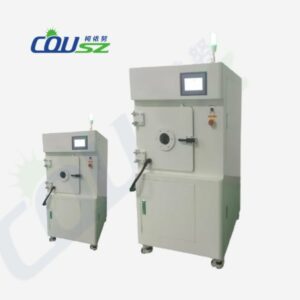
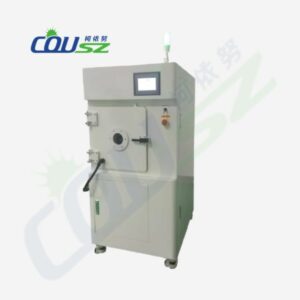
Vacuum Plasma System is a breakthrough surface treatment technology widely used for high-precision cleaning and strong adhesion enhancement. Operating inside a sealed vacuum chamber, the system generates a stable plasma state that enables uniform surface cleaning and activation, even on complex 3D geometries.
COUSZ delivers advanced vacuum plasma solutions to help manufacturers achieve consistent and superior product quality.
1. What is a Vacuum Plasma System?
A Vacuum Plasma System is a high-end surface treatment process in which materials are placed inside a sealed chamber. The chamber is evacuated to an extremely low pressure to remove ambient air, then a working gas (such as argon, oxygen, or gas mixtures) is introduced. Under the influence of electrical energy, the gas becomes ionized, forming a stable plasma environment.
Key differences between vacuum plasma and atmospheric plasma:
High plasma uniformity
At low pressure, plasma particles travel longer distances with fewer collisions, resulting in extremely uniform plasma distribution across the entire surface, including micro-holes and complex 3D structures.
Precise process control
Gas pressure and flow are accurately controlled, allowing fine adjustment of ion energy and density. This enables customized surface cleaning or activation levels for different materials.
2. Vacuum Plasma Cleaning Mechanism
Vacuum plasma cleaning is considered one of the most thorough industrial cleaning methods, combining physical and chemical effects.
Ion micro-sandblasting effect
High-energy ions bombard the material surface, breaking weak bonds and removing ultra-thin oxide layers, dust, and organic residues. This process significantly increases the effective surface area for subsequent bonding.
Chemical cleaning effect
When oxygen is used as the working gas, the plasma generates highly reactive oxygen radicals. These radicals react with organic contaminants such as oils, grease, and fingerprints, converting them into volatile compounds that are evacuated by the vacuum system. This method is essential for applications requiring ultra-clean surfaces.
3. Vacuum Surface Activation for Enhanced Adhesion
After vacuum plasma cleaning, surface activation is the key objective to improve material adhesion performance.
Increased surface energy
The Vacuum Plasma System removes contaminants and introduces polar functional groups (such as -OH, -COOH, -NH₂) onto the surface. These groups make the surface more hydrophilic, improving wettability—an essential factor for strong adhesion of adhesives, coatings, inks, and thin films.
Long-lasting bonding strength
Chemical bonds formed through vacuum plasma treatment are significantly more durable than physical or conventional chemical treatments, ensuring stable adhesion throughout the product’s lifecycle.
4. Specialized Applications of Vacuum Plasma Systems
Vacuum plasma technology is widely applied in industries with the highest technical requirements.
Electronics and semiconductor industry
– PCB and chip housing cleaning: removal of solder residues and oils before soldering, encapsulation, or protective coating
– Activation of wires and optical fibers: surface preparation of polymers before bonding or extrusion for enhanced mechanical adhesion
Medical and implant industry
– Sterilization and biocompatibility: cleaning and sterilizing medical implants such as heart valves, catheters, and orthopedic devices
– Functional biomedical coatings: plasma-assisted deposition of antibacterial or tissue-integration-enhancing thin films
Aerospace and composite manufacturing
– Composite bonding enhancement: vacuum plasma treatment is a standard process for carbon fiber and composite materials before adhesive bonding or lamination, significantly improving mechanical strength
5. Key Criteria for Choosing an Effective Vacuum Plasma System
Chamber size and configuration: The chamber must accommodate the required batch size. Cylindrical or rectangular configurations and optimized shelving ensure uniform plasma exposure.
Vacuum system performance: The vacuum pump must achieve the target working pressure quickly to minimize cycle time and maximize productivity.
Gas flow control capability: High-quality Vacuum Plasma Systems are equipped with precise mass flow controllers (MFCs) to accurately regulate argon, oxygen, and nitrogen for cleaning, activation, or coating processes.
Plasma frequency and power control: Adjustable RF power and standard 13.56 MHz frequency allow fine tuning of plasma intensity, preventing damage to sensitive materials.
Automation and data logging: User-friendly control systems should support recipe storage and repeatability, along with process data recording for quality control and traceability.
6. COUSZ – Leading Provider of Vacuum Plasma Systems
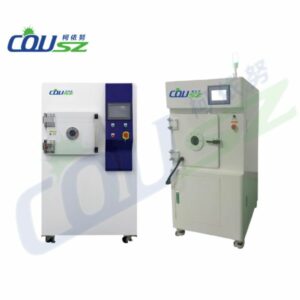
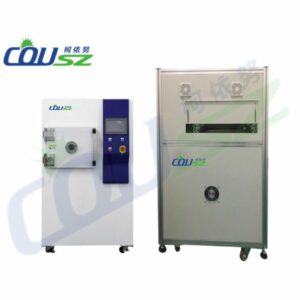
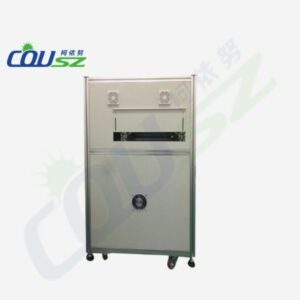
Available Vacuum Plasma System Models:
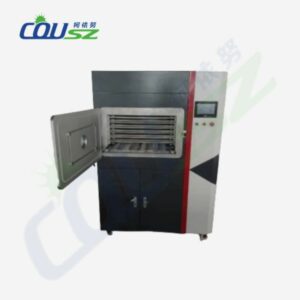
– O2 vacuum plasma cleaning machine
– N2 vacuum plasma treatment
– Vacuum plasma cleaning system
– C2 Vacuum Plasma Chamber
– CVP2 vacuum plasma cleaner
– CVP1 vacuum plasma treatment system
COUSZ is a trusted partner delivering comprehensive Vacuum Plasma System solutions for electronics, medical, and advanced manufacturing industries.
Why choose COUSZ?
-
Comprehensive low-pressure plasma solutions: from R&D-scale systems to high-volume production platforms
-
Expert technical support: customized plasma recipes and validation testing before investment
-
Professional maintenance and spare parts supply: ensuring long-term stable operation and maximum system performance