中文 (中国)
 Tiếng Việt
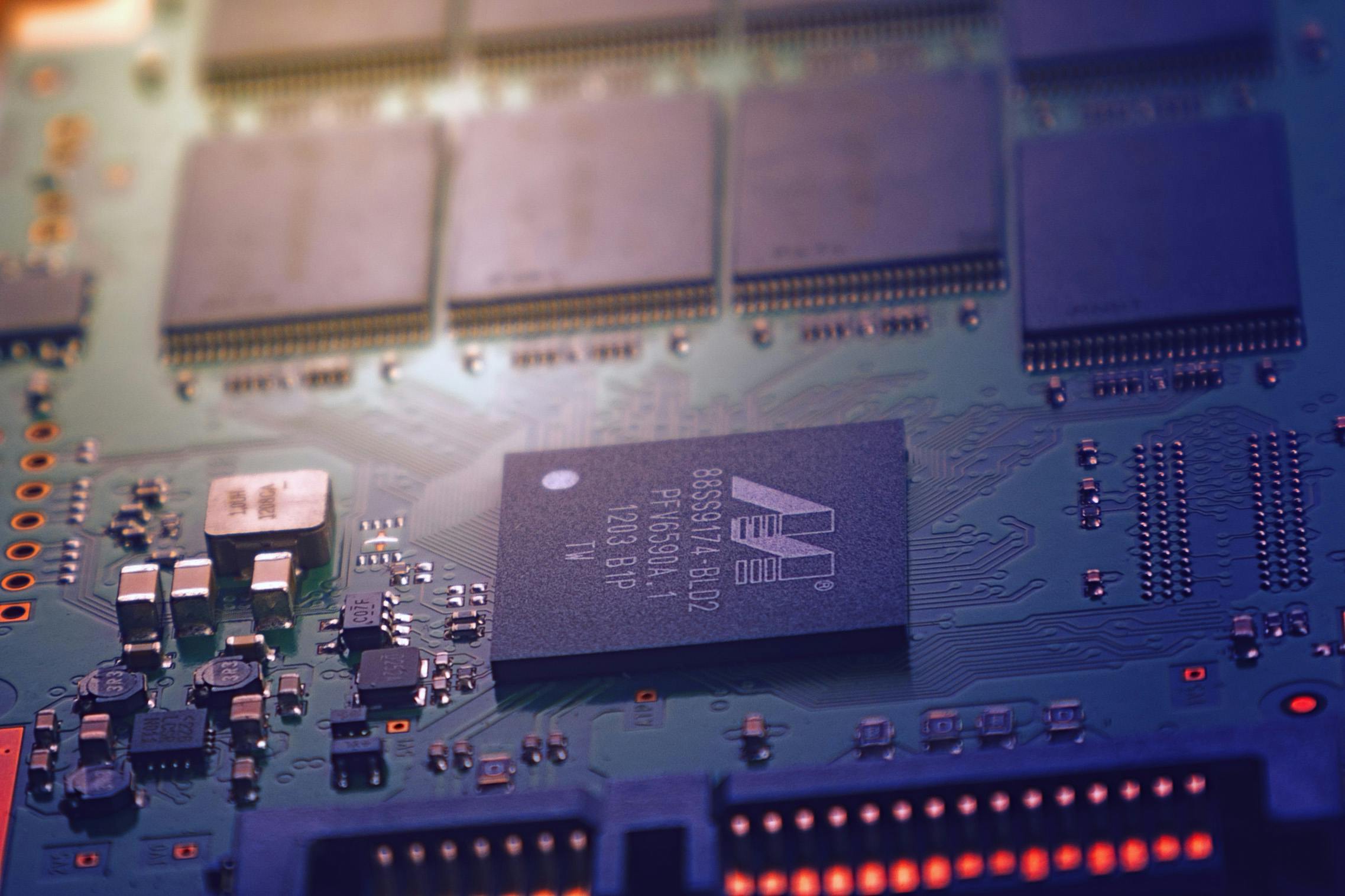
In the highly competitive Industry 4.0 era, UV curing technology has become the ultimate “golden key” helping enterprises shatter their productivity limits. Moving far beyond traditional surface drying, modern systems—especially utilizing industrial UV LED curing—drastically slash daily operating costs while remaining highly eco-friendly. This comprehensive guide provides a complete overview, from fundamental photochemistry principles to highly profitable practical applications on the factory floor.
1. What is the fundamental overview of UV curing technology?
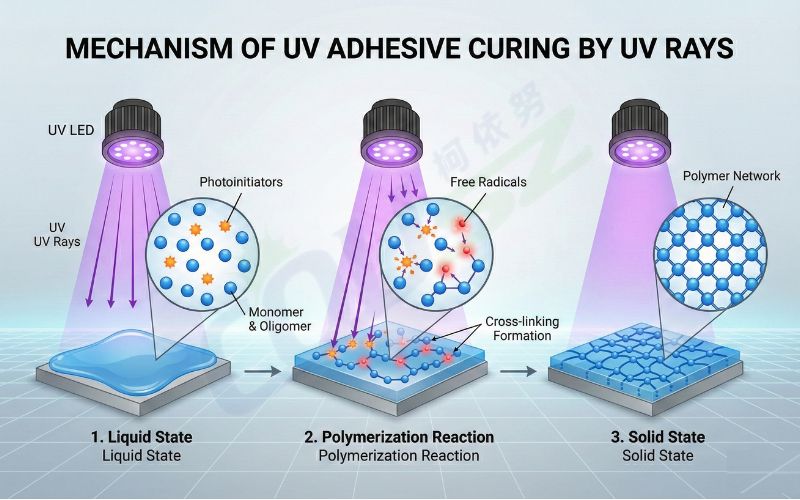
UV Curing Technology is absolutely not a standard thermal drying process that relies on heat and solvent evaporation. Instead, it is a highly advanced photochemical reaction that occurs almost instantaneously under the intense bombardment of ultraviolet light.
1.1 The science behind photopolymerization
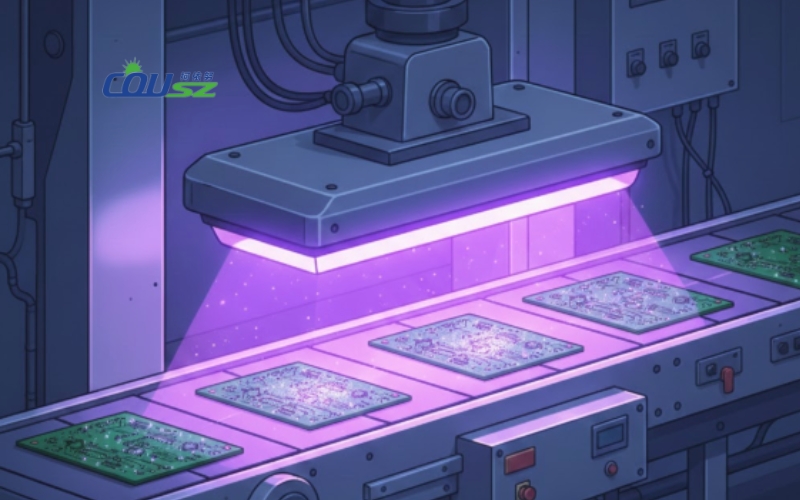
Advanced industrial systems utilize high-intensity ultraviolet photons to aggressively activate a photochemical reaction. This instantaneously transforms liquid monomers and oligomers (such as industrial adhesives, printing inks, or conformal coatings) into highly durable, cross-linked solid polymers within mere fractions of a second. Instead of waiting hours for toxic chemical solvents to evaporate, the photoinitiator molecules within the material rapidly bond together using the exact energy provided by specific ultraviolet wavelengths.
1.2 The role in modern manufacturing
Within high-speed, automated production belts, UV curing technology acts as the ultimate “bottleneck solver” for transit time. It allows the freshly bonded product to be immediately packaged or instantly moved to the next mechanical assembly stage, entirely eliminating the need for massive, expensive warehouse floor space previously dedicated to letting parts air-dry.
To explore the foundational mechanics in deeper detail, read our comprehensive guide: What Is a UV Curing Systems? How It Works, Key Technologies, and Industrial Applications.
2. What are the top 8 popular applications in production lines?
This photochemical technology is heavily present across almost all high-end manufacturing sectors that demand microscopic precision and flawless aesthetic quality.
Diverse industrial manufacturing uses
- Electronics and micro-components: Instantly securing tiny semiconductor parts, wire tacking, and applying protective conformal coatings across delicate PCB boards to prevent moisture damage.
- Industrial printing: Ultraviolet inks ensure razor-sharp, immediate prints on highly difficult non-porous substrates like rigid plastics, glass, and raw metals without smudging.
- Packaging manufacturing: Instantly curing vibrant inks and protective gloss coatings on food-grade and pharmaceutical packaging, ensuring compliance with strict safety standards.
- Medical device assembly: Bonding steel syringe needles, assembling IV catheters, and sealing hearing aids rapidly. The cold-curing nature ensures high adhesion without inducing thermal bacterial contamination or melting delicate medical-grade plastics.
- Camera module assembly: This is a highly sophisticated application where industrial UV LED curing is absolutely mandatory to precisely secure microscopic glass lenses without thermally warping the surrounding delicate plastic smartphone housing.
- Wood coating and furniture: Providing instantaneous, scratch-resistant hard coats on luxury wood panels, drastically reducing the production cycle from days to minutes.
- Automotive manufacturing: Used extensively in curing protective coatings on headlamp lenses, interior dashboard bonding, and touch-screen display laminations.
- Footwear assembly: Rapidly bonding shoe soles to upper materials, ensuring maximum structural integrity while eliminating toxic solvent-based glues from the factory environment.
For a deeper dive into these specific use cases, check out: Top 8 Applications of UV Curing Systems Across Industrial Production Lines.
3. What are the core UV curing system components?
To truly master the mechanics of your assembly line, you must dissect the hardware. The primary UV curing system components include highly specialized digital and optical elements working in perfect unison.
Breakdown of the essential hardware
- Digital Controller (PLC): The intelligent “brain” of the machine that meticulously manages the radiant intensity, exposure timers, and critical emergency safety protocols.
- LED Lamp Head: Houses the premium semiconductor diodes that emit the ultraviolet light. This is the most critical factor dictating overall cross-linking efficiency.
- Thermal Cooling System (Air/Water): A mandatory subsystem to ensure the chips operate stably without suffering from catastrophic thermal degradation.
- Aviation Cables: Heavy-duty, shielded wiring that transmits stable power and digital signals between the main controller and the emitting head, preventing electromagnetic interference.
- Power Supply Unit (Driver): Delivers highly precise, clean DC voltage to the array, preventing voltage spikes from burning the diodes.
- Sensors and IO Interface: Allows the UV curing system components to seamlessly “communicate” and handshake with automated robotic arms and central factory PLCs.
- Mounting Hardware: Flexible articulating arms, conveyor brackets, and adjustable joints for precisely establishing the focal distance of the lamp head.
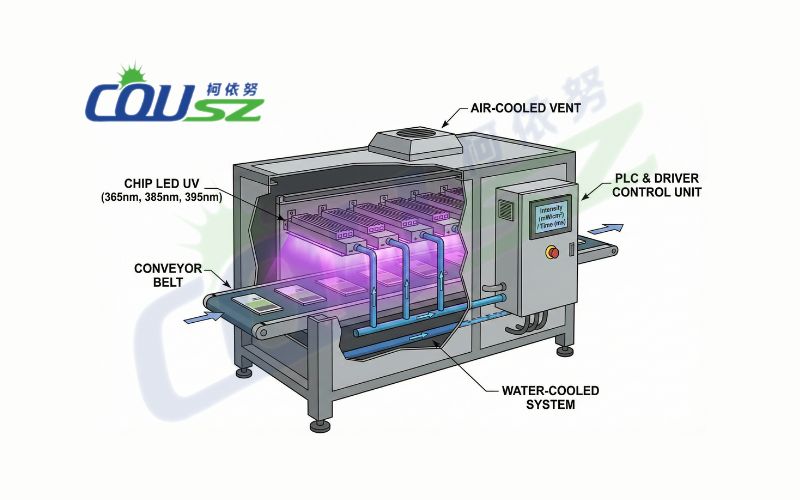
Understanding these parts is vital for proactive maintenance. Learn more here: What Are the Key Components of UV Curing Systems? Complete Breakdown about UV Curing System Spare Parts.
4. Why does effective cooling matter so much for UV LEDs?
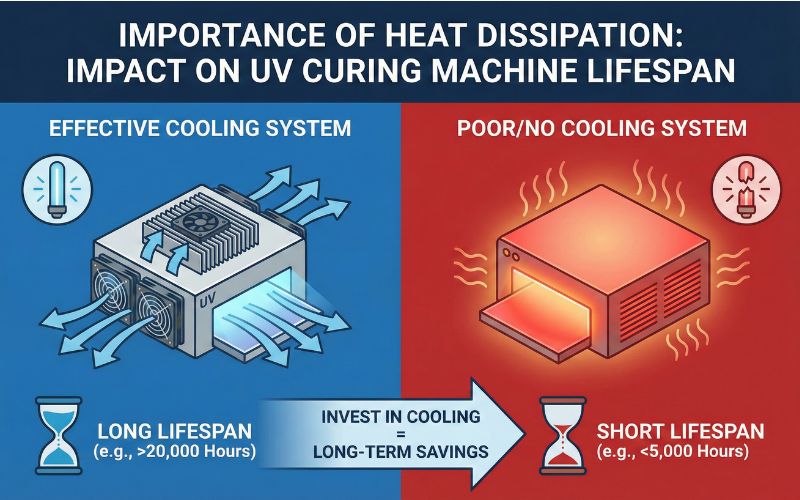
Although industrial UV LED curing arrays emit drastically less ambient infrared heat than legacy mercury vapor bulbs, rigidly controlling the exact microscopic junction temperature directly at the semiconductor chip is a matter of life and death for the equipment.
Protecting chip lifespan and stability
If the internal temperature spikes beyond safe thresholds (typically above 80°C), the LED chips will suffer rapid performance degradation and eventually burn out entirely. Furthermore, severe thermal fluctuations cause the ultraviolet radiant intensity to oscillate wildly, leading directly to uneven, patchy adhesive curing.
| Cooling Method | Characteristics & Design | Best Industrial Application |
|---|---|---|
| Air-Cooled | Highly compact, easy to install, utilizes high-velocity fans, lower initial CAPEX. | Low-to-medium power spot curing and manual assembly stations. |
| Water-Cooled | Extreme thermal dissipation efficiency, requires an external industrial Chiller and piping. | High-power flood arrays and 24/7 continuous high-speed conveyor lines. |
Failing to maintain proper thermodynamics risks permanently warping thin, heat-sensitive plastic substrates. For a comprehensive technical analysis, read: Why Effective Cooling Matters in UV Curing Systems.
5. How long is the standard UV adhesive curing time?
In standard industrial applications, the total UV adhesive curing time generally ranges from an incredibly fast 0.5 seconds to 5 seconds. However, this metric is not universally fixed; achieving this speed requires mastering several optical variables.
Variables affecting curing speed
According to advanced photochemistry studies by RadTech, several highly interwoven variables dictate your final line speed:
- Irradiance and precise wavelength: The higher the peak intensity (measured in mW/cm²), the shorter the required UV adhesive curing time. The wavelength (e.g., 365nm vs. 395nm) must perfectly match the absorption spectrum of the photoinitiators within the glue.
- Material type and coating thickness: Based on the Beer-Lambert law, extremely thick adhesive layers or heavily pigmented dark inks physically block photons from penetrating deeply, inherently demanding a much longer exposure duration to cure the bottom layers.
- Physical focal distance and conveyor speed: The gap between the lens and the substrate strictly dictates the delivered power. A faster conveyor belt requires a proportionally higher irradiance to deliver the same total energy dose.
To optimize your factory’s specific cycle times, we highly recommend reading: UV Adhesive Curing Time: Complete Guide from Basics to Advanced Applications.
6. What are the customs procedures to import these systems?
When importing advanced UV curing technology into Vietnamese industrial zones, enterprise procurement officers must strictly adhere to specific legal and logistical frameworks to avoid border delays.
Essential documentation and HS codes
To clear customs smoothly, your logistics team must prepare the following:
- Basic import documentation: You must secure the commercial Sales Contract, formal Commercial Invoice, detailed Packing List, and the official Bill of Lading (B/L).
- Reference HS Code: Industrial drying machinery of this class is typically categorized under the reference code 8419.39.90. Accurately declaring this code prevents tax penalties.
- Certifications and Quality Checks: Depending on the exact power class and specific application, certain models may require state quality inspections or conformity certifications under current Vietnamese regulations.
- Certificate of Origin (C/O): Crucial Tip: Always demand that your international supplier provides a formal C/O (such as Form E for China or Form D for ASEAN). This allows your enterprise to legally benefit from highly lucrative international import tax incentives, often dropping the import duty to 0%.

For a complete logistical breakdown, refer to: What Documents Are Required to Import UV Curing Systems? Customs Procedures Explained.
7. Faqs – frequently asked questions about COUSZ brand systems
The COUSZ brand is rapidly becoming the premier choice in the Vietnamese market due to our uncompromising stability and pioneering engineering. Here are the most common inquiries regarding our technology:
Common technical inquiries
- Which industries fit COUSZ equipment best?
Our highly diversified machinery is specifically optimized for high-end electronic assembly lines, medical device manufacturing, smartphone micro-component assembly, and premium cosmetic packaging printing. - What is the true lifespan of the LED lamp head?
COUSZ exclusively utilizes ultra-premium semiconductor chips. This guarantees a continuous operational lifespan exceeding 25,000 hours, which equates to roughly 5 to 10 years of heavy utilization under standard factory conditions. - What are the actual operating costs?
Thanks to the incredible electrical efficiency of industrial UV LED curing, COUSZ systems actively slash factory electricity bills by up to 60% compared to legacy thermal ovens, while entirely eliminating the brutal recurring costs of replacing shattered mercury bulbs. - Do you provide local technical support and maintenance?
Absolutely. COUSZ provides 24/7 technical support and maintains a massive local inventory of genuine replacement UV curing system components in Vietnam, ensuring your assembly line never suffers prolonged downtime. - How seamless is automated line integration?
Flawless. Our systems feature robust PLC communication ports (RS485/Modbus), allowing them to be effortlessly integrated into fully automated 6-axis robotic dispensing arms or high-speed smart conveyors.
For more answers to technical questions, visit: COUSZ UV Curing Systems FAQ: Answers to Your Most Common Questions.
8. Conclusion: why should your enterprise invest today?
Transitioning your factory to UV curing technology is not merely a superficial equipment upgrade; it is a highly aggressive, data-driven investment strategy for the future of intelligent manufacturing.
Long-term benefits and smart manufacturing
The long-term benefits are staggering. By adopting this technology, you drastically reduce toxic chemical solvent waste (VOCs), strictly protect the respiratory health of your workforce, and massively elevate your brand’s prestige in the eyes of international ESG auditors. Furthermore, integrating these digital systems connects your facility to the smart manufacturing grid, allowing for real-time performance tracking.
Ultimately, optimizing your UV adhesive curing time guarantees that your output products meet the absolute strictest durability and aesthetic standards in the global market, giving you a massive competitive edge.
Ready to revolutionize your production line?
If you are actively seeking customized solutions to eliminate production bottlenecks, connect directly with the engineering experts at COUSZ Vietnam today!
👩💼 Senior Technical Consultant: Ms. Yuna 🌟
📞 Tel / WhatsApp / WeChat / Zalo: (84) 965 535 348
📧 Email: sales03@cousz.com
🌐 Website: cousz-vn.com
📍 Headquarters: Ngo Xa Village, Phat Tich Commune, Bac Ninh Province, Vietnam