中文 (中国)
 Tiếng Việt
Plasma Surface Treatment Machines: Optimizing Material Adhesion
Plasma surface treatment machines are core, irreplaceable technology in modern industries—from electronics, automotive, and biomedical applications to advanced composites. These machines use plasma, the fourth state of matter, to significantly enhance surface properties, improving adhesion without altering the bulk structure. This guide will help you understand the operating principles, classifications, and how to choose the most suitable plasma surface treatment system for your production needs.
1. What is Plasma? Understanding the Fourth State of Matter
Plasma is an ionized gas composed of positive ions, free electrons, and neutral reactive radicals. When applied in industrial processes, plasma surface treatment machines use electrical energy—typically radio frequency (RF) or microwave—to generate plasma.
The operating principle relies on three simultaneous mechanisms:
– Cleaning: Plasma particles collide with the surface, breaking down organic contaminants, fingerprints, or thin oxide layers. This is why the system is also called a plasma cleaning machine.
– Activation: Reactive radicals in the plasma chemically interact with the surface, forming polar functional groups (e.g., hydroxyl, carbonyl), increasing surface energy and improving adhesion.
– Coating: Some advanced systems, like CVD Plasma, use precursors to deposit a functional thin film, enhancing surface properties.
Plasma treatment can elevate surface energy to 72 dyne/cm or higher, ensuring superior bonding for adhesives, coatings, or printing.
2. Plasma Surface Treatment Machine Types
Choosing the right system requires understanding the two main technologies: vacuum plasma and atmospheric plasma.
2.1 Vacuum Plasma Machines
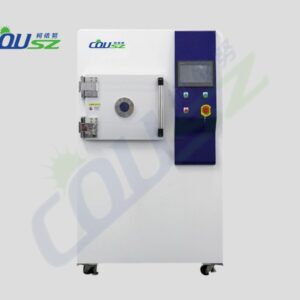
Principle: Material is placed in a vacuum chamber; working gases (argon, oxygen, nitrogen) are ionized under very low pressure.
Advantages:
– Uniform, thorough cleaning and activation
– Ideal for complex 3D parts requiring high cleanliness
– Standard solution for electronics and biomedical applications
Limitations:
– Batch processing
– Requires vacuum pump and gas purging
– Not ideal for high-speed production lines
2.2 Atmospheric Plasma Machines
Principle: Plasma is generated and discharged into the ambient atmosphere through a nozzle or jet using compressed or inert gases.
Advantages:
– Continuous in-line processing at high speed
– Easily integrated into automated production lines
– Known as plasma coating machines
Limitations:
– Narrower treatment area
– Less uniform than vacuum plasma
– Best for flat surfaces or specific contact points
3. Breakthrough Applications
Plasma surface treatment machines are strategic tools that solve challenges traditional methods cannot.
3.1 Automotive & Aerospace
– Enhanced bonding: Treat plastic parts (dashboards, headlights) before painting or polyurethane gluing for durable adhesion under extreme heat and vibration.
– Metal cleaning: Vacuum plasma removes ultra-thin oxide and oil layers from metal and composite parts.
3.2 Biomedical & Medical Devices
– Sterilization and cleaning: Treat catheters, heart valves, and implants to ensure sterility and biocompatibility.
– Functional coating: Plasma coating machines deposit thin antimicrobial or drug-adherent films.
3.3 Electronics & Semiconductors
– PCB and component activation: Improve solder wettability and surface prep before encapsulation.
– Display cleaning: Essential for touch panels before optical bonding.
3.4 Packaging & Printing
– Film treatment: Treat PE, PP, PET films before printing or lamination to prevent ink fading or adhesive failure—a common application for atmospheric plasma.
4. Choosing the Right Plasma Surface Treatment System
4.1 Technology & Material Compatibility
– Identify materials: engineering plastics, metals, glass, composites
– Choose vacuum for thorough 3D cleaning, atmospheric for high-speed inline processing
4.2 Working Gases & Functional Roles
– Cleaning/Activation: Oxygen or compressed air
– Physical enhancement: Argon for physical surface effects
– Coating: Precursor liquids or gases for functional films
4.3 Power & Frequency Control
Precise control of wattage and frequency impacts plasma depth and quality.
4.4 Automation & Integration
– Atmospheric systems: ensure easy integration with robots, conveyors, PLCs
– Vacuum systems: consider customizable chamber sizes and automatic loading/unloading
5. Economic & Environmental Benefits
5.1 Eliminate Harmful Chemicals
Plasma is a dry, eco-friendly process, eliminating solvents like acetone or IPA, reducing waste and improving sustainability.
5.2 Superior Adhesion Strength
Increases surface energy dramatically, ensuring mechanically and chemically strong bonds, reducing defects and warranty claims.
5.3 Optimize Production Costs & Labor
High automation, especially in atmospheric plasma systems, minimizes human intervention, ensures consistency, and reduces labor costs compared to manual cleaning.
6. COUSZ – Trusted Partner for Plasma Surface Treatment
COUSZ provides not just machines, but complete technical plasma solutions for your production needs.
6.1 Product Portfolio
Vacuum Plasma Treatment:
– O2 vacuum plasma cleaning machine
– N2 vacuum plasma treatment
– Argon vacuum plasma cleaning system
– C2 Vacuum Plasma Chamber
– CVP2 vacuum plasma cleaner
– CVP1 vacuum plasma treatment system
Direct Nozzle Plasma Treatment:
– DC1000 plasma treatment machine
– Industrial DC500 plasma treatment equipment
– Inline DC1000S plasma surface treatment systems
– DC500 jet nozzle plasma surface treatment machine
– DC500S jet nozzle plasma surface cleaner
Rotary Nozzle Plasma Systems:
– RC1000 rotary nozzle plasma cleaning system
– RC800 inline plasma cleaning machine
– RC1000S inline plasma surface treatment equipment
– RC800S Plasma Surface Modification System
Low-Pressure Plasma Equipment:
– Low Pressure Plasma Equipment
– Low Pressure plasma cleaning systems
– Low Pressure Plasma Machine (CVP 2mm)
– Atmospheric plasma cleaner (CVP 25mm)
6.2 Expert Consulting & Testing
COUSZ engineers provide surface energy evaluation (dyne test) and set optimal plasma parameters. Free testing ensures plasma treatment effectiveness before investment.