中文 (中国)
 Tiếng Việt
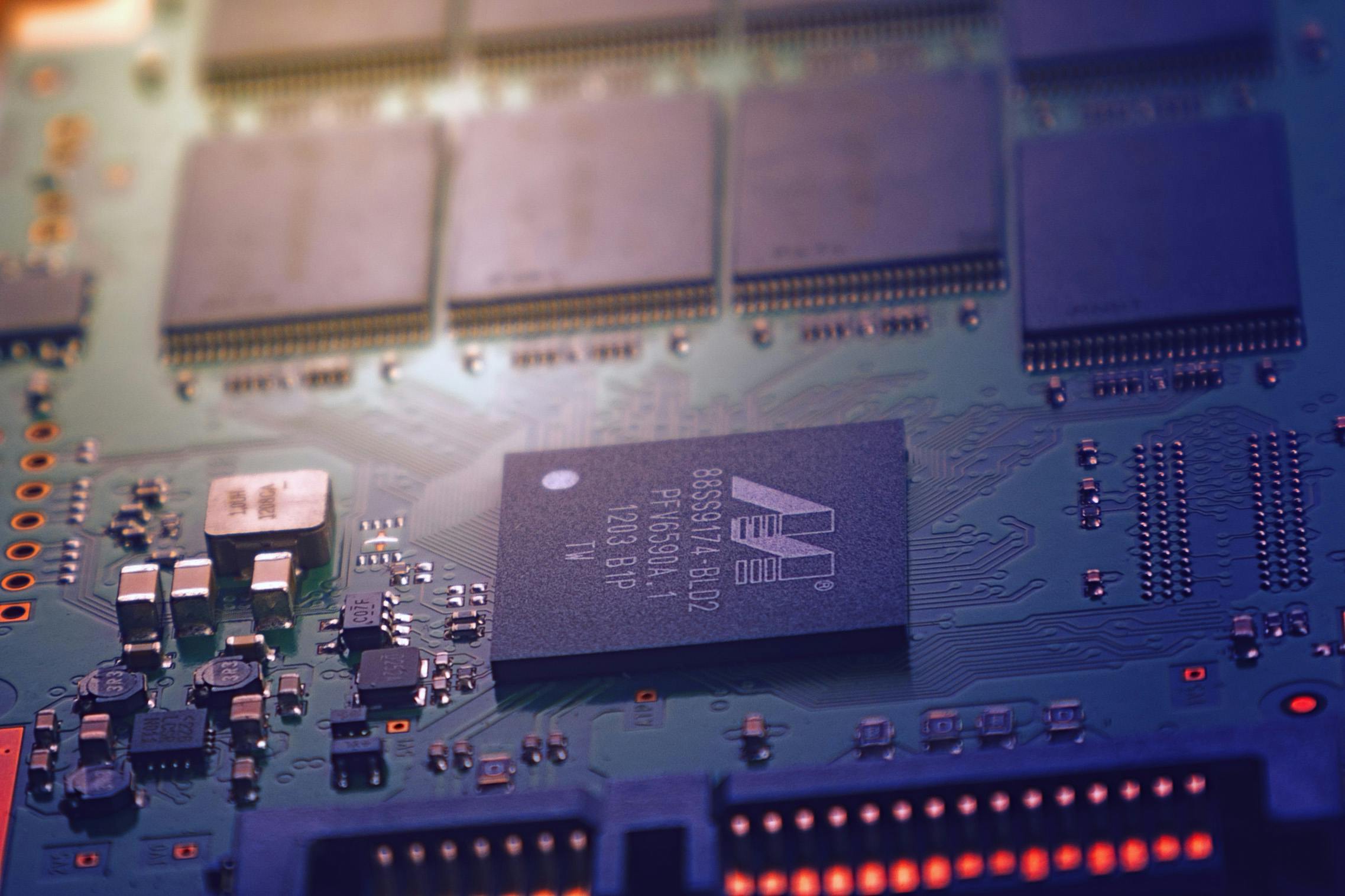
In the relentless race for maximum productivity across major industrial hubs like Bac Ninh and Binh Duong, optimizing your assembly line with ultraviolet technology is an absolute necessity. However, seamlessly integrating UV curing systems into an active factory is far more complex than simply plugging in a machine. At COUSZ Vietnam, we deeply understand the technical bottlenecks enterprises face. This comprehensive guide breaks down the critical elements you must evaluate to build a professional, flawlessly stable production line.
1. Introduction to integrating UV curing systems
In the modern era of smart electronics, medical device manufacturing, and automotive assembly, the speed at which adhesives dry is the ultimate “bottleneck” dictating your total output volume. According to market reports from Grand View Research, the global ultraviolet market is projected to hit $8.1 billion by 2030, proving the irreversible shift away from slow, traditional thermal ovens.
Successfully navigating the integration process requires a holistic approach, transitioning from understanding basic material physics to calculating long-term financial benefits. Below is a detailed breakdown to ensure your enterprise makes the smartest capital investment possible.
1.1 Understanding the UV adhesive curing process
To start, you must grasp the fundamental UV adhesive curing process. It is a highly violent, ultra-fast photochemical reaction. Instead of relying on slow solvent evaporation like heat ovens, high-intensity ultraviolet light is blasted onto the substrate. This light provides massive energy that forces microscopic photoinitiators to shatter chemical bonds, instantly linking monomers and oligomers into a highly durable, solid polymer network.
By mastering this UV adhesive curing process, factories achieve instantaneous drying, superior bond strength, and incredibly stable quality control. Modern LED technology is exceptionally power-efficient and generates zero toxic ozone, making the UV adhesive curing process perfect for cleanrooms.
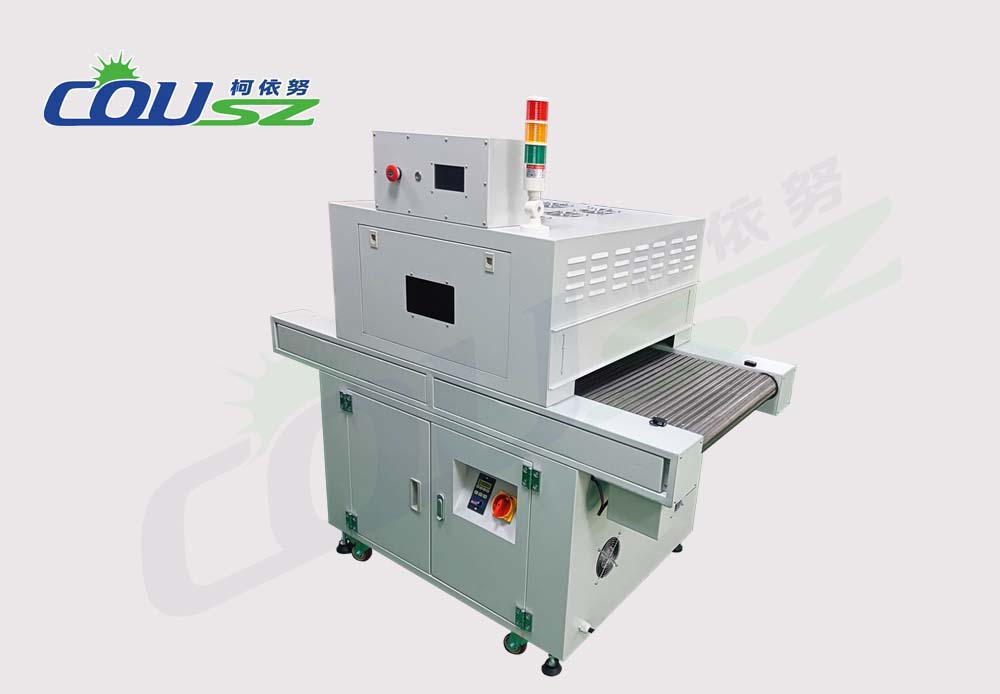
2. Crucial factors to evaluate before integrating UV curing systems
Before you sign any purchase orders, enterprise managers must completely decode the following five technical challenges. Failing to analyze these factors before integrating UV curing systems will lead to expensive factory downtime.
2.1 Substrate material properties and heat limits
The base material of your product dictates exactly which type of industrial UV curing equipment you must purchase. Surface characteristics directly impact adhesion strength and thermal distortion risks.
- Heat sensitivity: If you are manufacturing thin PET plastic films, delicate semiconductor wafers, or sensitive CMOS camera modules, utilizing outdated mercury lamps will instantly melt or warp your products due to temperatures exceeding 100°C. In this scenario, purchasing cold-source industrial UV curing equipment (running safely at 35°C – 45°C) is strictly mandatory.
- Reflectivity and roughness: Highly polished metal surfaces will aggressively reflect ultraviolet light back into the lamp, requiring specialized protective quartz lenses. Conversely, rough, porous surfaces demand a much higher accumulated energy dose (mJ/cm²) to ensure the glue fully penetrates the micro-crevices.
2.2 Matching the correct adhesive formulation
Selecting the ideal chemical glue is a step that goes hand-in-hand with purchasing your hardware. You simply cannot buy industrial UV curing equipment without knowing the exact chemical absorption wavelength of your chosen adhesive.
- Absorption wavelength: The vast majority of modern industrial glues react most violently at 365nm or 395nm. Firing the wrong wavelength at the glue will cause severe surface curing while leaving the internal core completely liquid.
- Coating thickness: According to the Beer-Lambert law, light intensity drops exponentially as it penetrates deep into dense materials. For ultra-thick potting resins, you require a machine with immense penetrating irradiance.
👉 Learn how to elevate your manufacturing lines:
Complete guide to UV curing technology types and comparisons
2.3 Synergizing dispensing and integrating UV curing systems
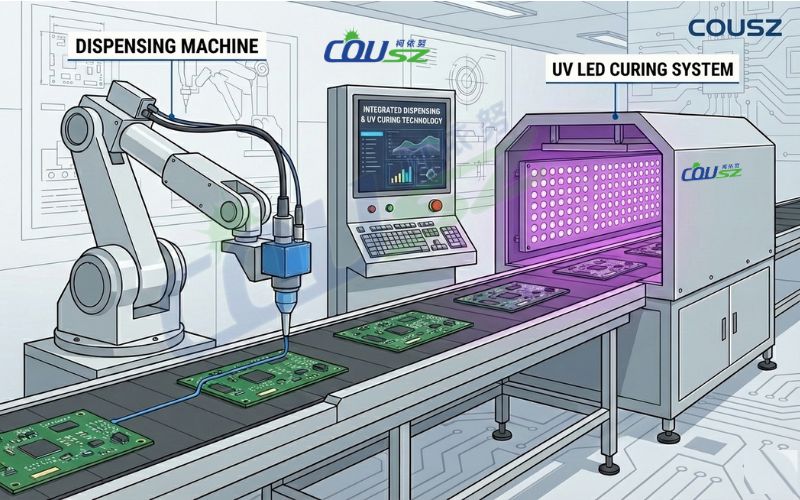
The robotic dispensing technology you utilize has a massive impact on your drying stage. If you deploy high-speed, high-pressure pneumatic dispensers, the impact of the glue droplet hitting the substrate can introduce microscopic air bubbles. Flawlessly integrating UV curing systems immediately after the dispensing valve ensures that a highly uniform blanket of radiation instantly locks the glue in place, totally preventing surface pitting and maintaining absolute structural integrity.
2.4 Analyzing costs and calculating the UV LED technology ROI
Initial capital expenditure is often the largest psychological barrier for factory directors in Vietnam, as solid-state LED arrays are priced higher than traditional thermal ovens. However, properly calculating the UV LED technology ROI reveals a vastly different, highly profitable long-term picture.
| Comparison Criteria | Thermal Ovens (Heat) | Mercury Vapor Lamps | COUSZ UV LED Curing Systems |
|---|---|---|---|
| Initial Capex | Low | Medium | Moderately High |
| Monthly Power Bill | Extremely High | High | Very Low (Saves ~70%) |
| Component Lifespan | Durable | 1,000 hours (Frequent) | 30,000 hours (Ultra-stable) |
| Production Speed | Slow (Hours) | Fast (Seconds) | Instantaneous |
Based on rigorous financial modeling, the UV LED technology ROI is consistently achieved within just 12 to 18 months, primarily driven by a 70% slash in electricity bills and zero bulb replacement labor. Most importantly, eliminating heat-related product defects creates massive “hidden profits” that rapidly compound over time.
3. The standard workflow for integrating UV curing systems
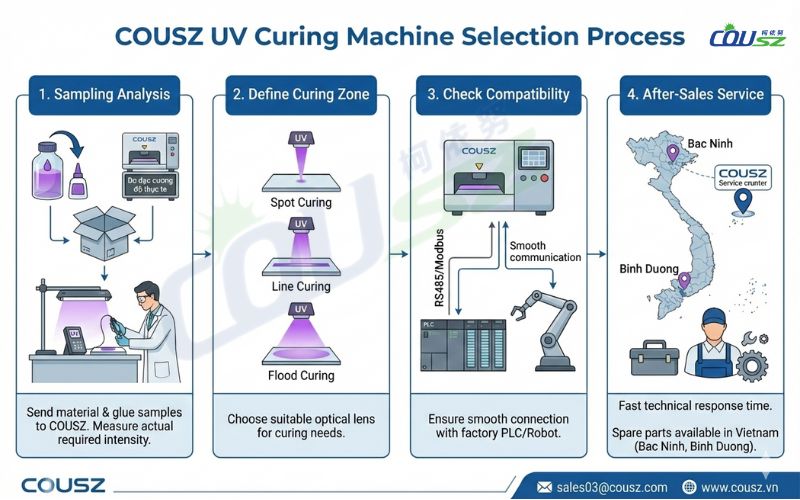
To proactively avoid multi-million-dong mistakes, COUSZ strongly recommends following this strict 4-step international protocol when integrating UV curing systems into your facility:
3.1 Sampling, sizing, and protocol connection
- Physical sampling: Never blindly buy machinery based on a PDF catalog. Always mail your physical substrate and chemical glue directly to COUSZ so our lab can measure the exact irradiance required to cure it perfectly.
- Determining the curing zone: Do you need a micro-spot, a linear line, or a massive flood array? This completely dictates the specific optical quartz lens we will engineer for you.
- PLC compatibility: Ensure the new machinery can communicate flawlessly with your existing factory robots via standard RS485/Modbus protocols.
- After-sales support: Particularly in industrial zones like Bac Ninh or Binh Duong, rapid technical response time is a matter of life or death for your quota. Partnering with a localized supplier guarantees replacement parts are always in stock.
4. Faqs about integrating UV curing systems
Do I need to replace my entire production line to add ultraviolet technology?
Not at all. COUSZ specializes in highly modular retrofit solutions that can be seamlessly bolted directly onto your existing mechanical frames. Transitioning from thermal heat typically only requires modifying the final drying station on the conveyor belt, saving your enterprise massive infrastructure costs.
How does the automated dispensing method affect my machine choice?
It has a massive impact. If your automated robotic arms utilize high-pressure jet dispensing, the impact can introduce tiny air bubbles into the fluid. You must select a machine equipped with highly uniform optical lenses to instantly freeze the glue in place, ensuring the surface remains perfectly smooth without pitting.
What specific criteria should I use to select a reliable equipment supplier?
You must evaluate suppliers based on three absolute pillars: First, their capability to perform live physical sampling in a laboratory. Second, their engineering team’s deep understanding of complex PLC control integration. Third, their localized logistical capacity to deliver spare parts immediately, preventing any catastrophic factory downtime.
5. Contact COUSZ for integrating UV curing systems
Executing an upgrade of this magnitude is a highly complex engineering project that demands absolute technical precision. Mastering these criteria will give you the utmost confidence when presenting the ROI proposal to your board of directors.
Do not hesitate to reach out to our elite engineering team for a customized, tailor-made factory solution designed to shatter your production quotas:
👩💼 Senior Technical Consultant: Ms. Yuna 🌟
📱 Zalo / WhatsApp / Wechat / Tel: (84) 965 535 348
📧 Email: sales03@cousz.com
🌐 Website: cousz-vn.com
🏢 Headquarters: Bac Ninh & Ho Chi Minh City, Vietnam.