中文 (中国)
 Tiếng Việt
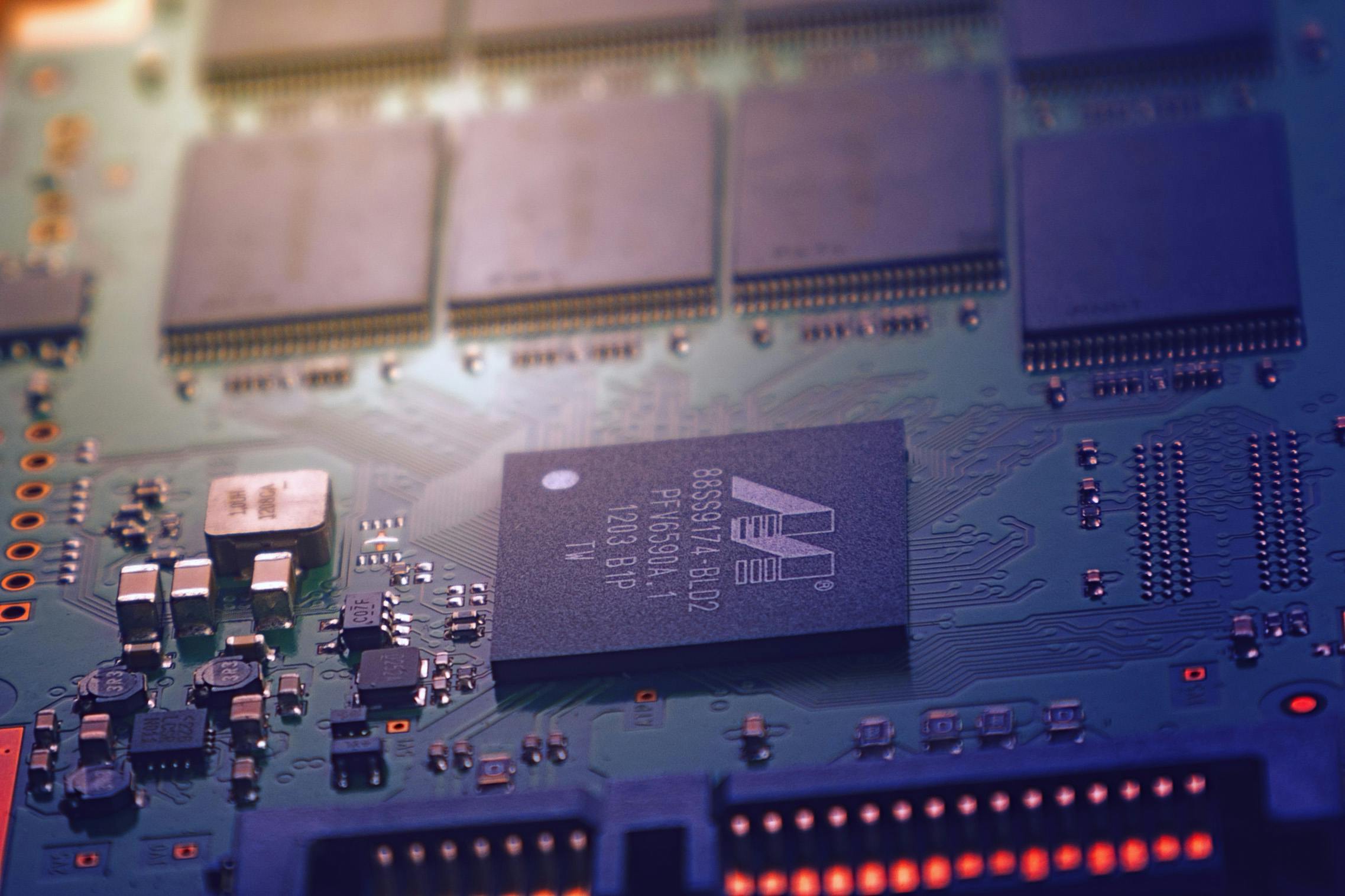
In the smart manufacturing era of 2026, UV curing technology has become the beating “heart” of high-end electronic assembly, medical device production, and premium packaging lines. Fully understanding how to operate and select the right industrial UV LED equipment not only helps enterprises accelerate their drying speeds by up to 5 times but also reduces electrical consumption by an astounding 70%. This comprehensive article will deeply analyze the technical and economic aspects to ensure your capital investment is highly effective.
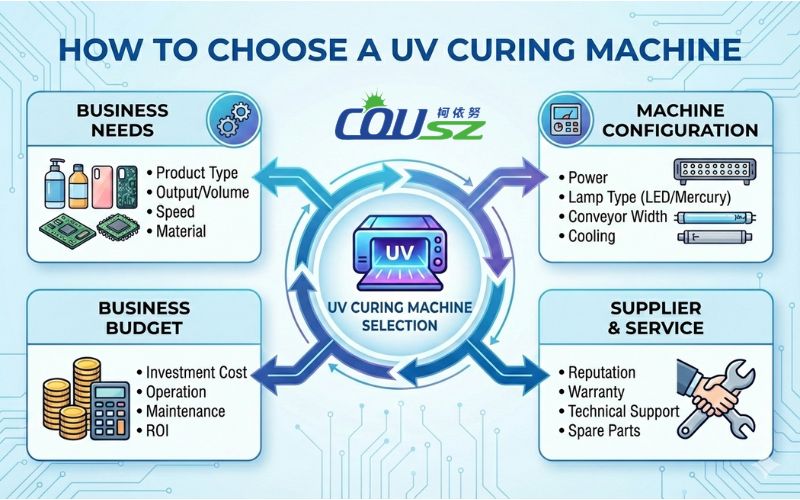
1. How to choose the right UV curing equipment for your business?
Selecting the optimal hardware is not simply about picking the brightest lamp. It is a highly complex equation balancing chemical formulation and optical physics. According to research from the International UV & EB Technology Association (IUVPA), over 40% of production defects in the UV adhesive curing process originate from choosing the incorrect light source or mismatched wattage.
1.1 Understanding spot, flood, and conveyor systems
To make the correct choice, enterprise engineers must categorize their needs based on actual factory floor applications:
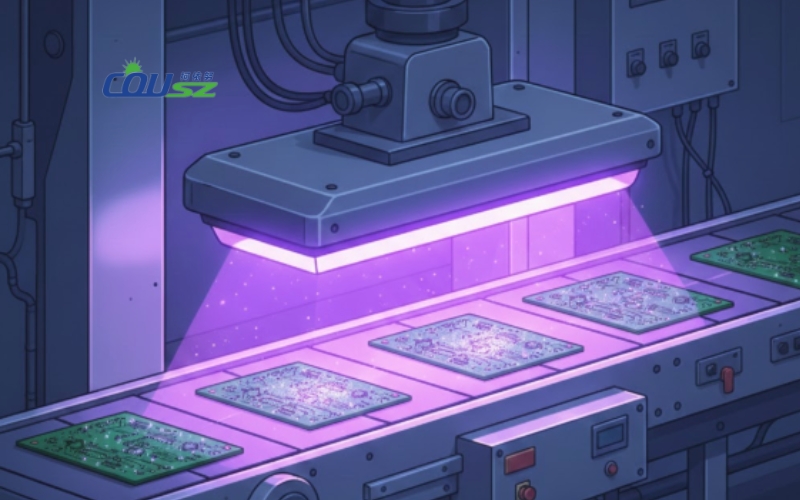
- Spot curing systems: The premier choice for manufacturing microscopic electronic components and delicate medical devices (such as IV tubes and hearing aids). By concentrating photon energy into a microscopic focal point (ranging from 3mm to 8mm), it guarantees absolute precision without thermally damaging adjacent heat-sensitive microchips.
- Flood curing systems: Ideal for wide-area irradiation, such as hardening protective coatings on glass touchscreens, wood panels, or large automotive components.
- Conveyor systems: The ultimate solution for mass production. Conveyor speeds can be dynamically adjusted to perfectly match the precise time required for the UV adhesive curing process of specific chemical formulations.
For more detailed procurement strategies, read: How to Choose the Right UV Curing Systems for Your Business: A Complete Guide.
2. UV LED vs mercury lamps: which technology optimizes costs in 2026?
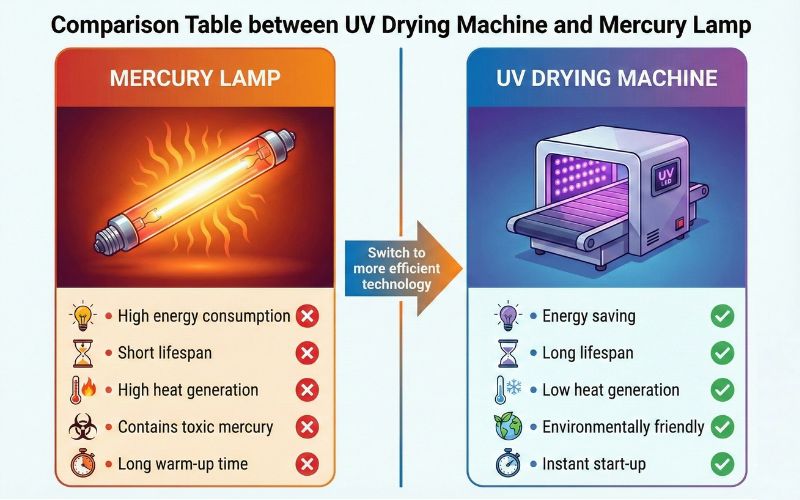
As we navigate 2026, the industrial shift from legacy mercury vapor lamps to solid-state UV curing technology (LED) has become an irreversible global trend. Research published in the Journal of Materials Science indicates that while the initial capital expenditure (CAPEX) for LED is roughly 20-30% higher, the Total Cost of Ownership (TCO) after just two years drops significantly below that of mercury setups.
Comparing lifespan, heat, and energy efficiency
| Technical Characteristic | Traditional Mercury Lamps | UV LED Technology (2026) |
|---|---|---|
| Bulb Lifespan | 1,000 – 2,500 hours | 20,000 – 40,000 hours |
| Thermal Output (Heat) | Extremely High (Warps plastics) | Very Low (Cold Curing) |
| Warm-up Time | Requires 5-10 minutes | Instantaneous (Instant On/Off) |
| Energy Efficiency | 15% – 20% | 50% – 80% |
Deploying industrial UV LED equipment entirely eliminates toxic, environmental-polluting ozone gas and hazardous mercury waste. Most importantly, the instant on/off capability allows factories to consume electricity strictly only when a physical product passes under the optical sensor, slashing monthly energy bills by up to 70%.
Dive deeper into this financial and technical breakdown: UV Curing Systems vs Mercury Lamps: Which Is More Cost-Efficient for Businesses in 2026?
3. What are the top 5 cousz systems on the market?
The COUSZ brand has long solidified its position as a leading expert in the Asian and Vietnamese markets. At COUSZ, all machine series are rigorously optimized for heavy-duty industrial durability.
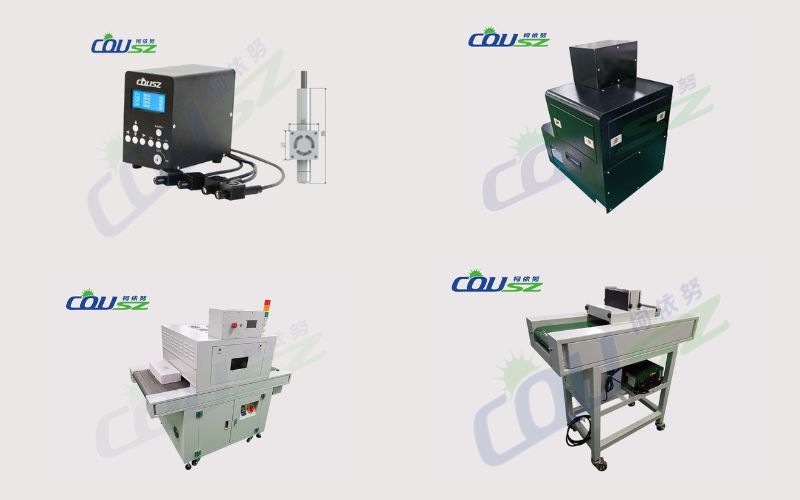
Exploring spot, flood, conveyor, linear, and handheld series
- COUSZ UV LED Spot S-Series: The absolute pinnacle of precision, boasting a peak irradiance of up to 20,000 mW/cm². Perfectly suited for smartphone camera lens assembly.
- COUSZ UV Flood F-Series: A massive high-power array delivering over 90% optical uniformity across a wide 200x200mm irradiation area.
- COUSZ C-Series Conveyor: Integrated with a highly intelligent PLC controller, easily facilitating deep UV curing system integration with robotic arms in fully automated lines. This is a clear testament to modern engineering.
- COUSZ Linear UV System: Features a long, bar-shaped design dedicated to drying extended adhesive lines on the edges of smart TVs or laptops.
- COUSZ Portable Handheld: A highly flexible, mobile device engineered for artisanal workshops or localized on-site defect repairs.
👉 Learn how to elevate your manufacturing lines:
UV Curing Technology: How Manufacturers Increase Productivity and Cut Operating Costs
To see which specific model matches your factory floor, review: Top 5 UV Curing Systems on the Market and Which Suit Your Business Needs.
4. What are the 6 key technical parameters in photopolymerization?
To truly master UV curing technology, process engineers must possess a firm grasp of the complex relationships between physical optical parameters. According to Professor Stephen J. Postle, a leading expert in photo-polymerization, the success of the UV adhesive curing process depends not merely on brightness, but on the total accumulated energy absorbed.
Mastering wavelength, irradiance, and energy density
The fundamental formula for curing dose is: E (J/cm²) = I (W/cm²) × t (s).
Based on this, enterprises must meticulously control 6 crucial parameters:
- Wavelength: Typically 365nm (for rapid surface curing) or 395nm (for deep core penetration).
- Irradiance: The absolute peak strength of the light striking the product surface.
- Energy Density: The total sum of photons the adhesive absorbs to completely finalize the chemical reaction.
- Working Distance: The physical gap between the quartz lens and the glue. An error of just 1mm can slash intensity by 10%.
- Surface Temperature: Ensuring the optical radiation does not overheat and warp the physical substrate.
- Uniformity: The light blanket must be perfectly even to prevent “wet spots” and inconsistent cross-linking.
Applying these metrics correctly drops the Defect (NG) rate below 0.1%. Learn to calibrate these metrics here: What Are the 6 Key Technical Parameters in UV Curing Technology?
5. What are the 5 common myths about UV curing technology?
Many enterprises newly adopting UV curing technology frequently fall victim to disastrous misunderstandings, leading to massive budget waste and factory downtime.
Debunking misconceptions about power, heat, and safety
- Myth 1: Higher electrical wattage equals faster drying. In reality, the machine’s Wattage is just electrical consumption. What truly dictates speed is the actual optical output irradiance (mW/cm²) physically reaching the substrate.
- Myth 2: LED lamps generate zero heat. While they lack the blistering infrared heat of mercury bulbs, the semiconductor chips themselves still generate internal thermal loads. Industrial water or air chillers are absolutely mandatory to keep the hardware stable.
- Myth 3: Any blue-violet light can cure glue. Many cheap, unbranded lights emit standard blue light without the precise ultraviolet wavelengths required to trigger the chemical photoinitiators.
- Myth 4: The radiation is inherently lethal to workers. If proper UV curing system integration includes standard dark acrylic shielding and certified safety goggles, the operator is 100% safe.
- Myth 5: One LED system only works for one type of glue. False. Modern multi-wavelength industrial UV LED equipment can dynamically process a vast variety of materials on the exact same assembly line.
Protect your capital investment by reading: 5 Common Myths About UV Curing Technology: What You Need to Know Before Investing.
6. What are the top 5 factors to consider before integrating UV systems?
Before committing to a multi-million-dong assembly line upgrade, factory managers must execute a rigorous 5-point technical audit.
Evaluating adhesive spectrum, cycle time, and environment
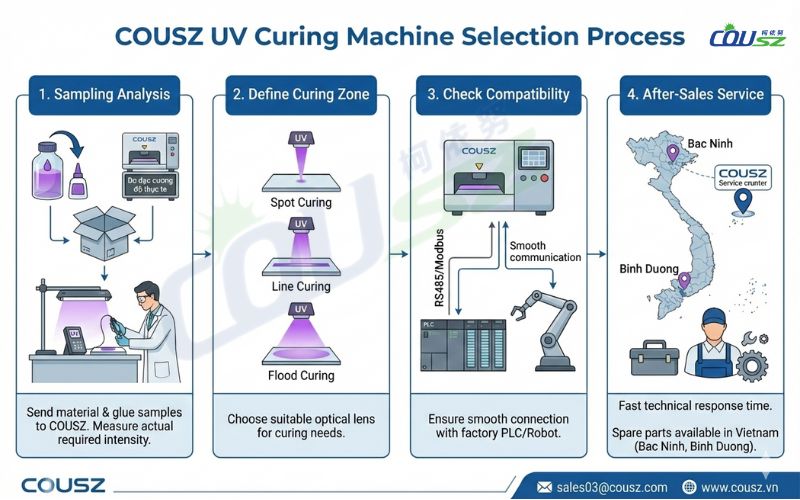
- Adhesive absorption spectrum: Demand the chemical spectral chart from your glue supplier. Your machine’s wavelength must perfectly match the glue’s peak absorption curve.
- Production cycle time: If your conveyor runs at 100 units per minute, your chosen UV curing technology must guarantee a complete, solid cure within an ultra-fast 0.5 to 1.0-second window.
- Working environment: Factory floor dust, ambient humidity, and chemical smoke can heavily foul the optical lens, drastically reducing the efficiency of the UV adhesive curing process.
- Scalability and automation: Can the digital controller easily support advanced UV curing system integration with the factory’s central MES/ERP networks?
- After-sales logistics: Does the supplier, like COUSZ, maintain a massive local inventory of genuine replacement parts and dispatch rapid-response technicians within Vietnam?
To avoid costly integration mistakes, strictly follow: What Are the Top 5 Factors to Consider Before Integrating UV Curing Systems?
7. Conclusion: why partner with industry experts?
UV curing technology is rapidly unlocking an entirely new era for highly sustainable, hyper-efficient industrial manufacturing. With the unparalleled engineering support and advanced machinery from COUSZ, your enterprise can effortlessly optimize operating costs while producing flawless products that utterly dominate the competitive market.
Contact COUSZ for custom industrial solutions
To receive the most highly optimized photopolymerization solution tailored exactly for your unique production workflow, do not hesitate to contact our elite technical engineering team for an in-depth consultation and detailed quotation:
👩💼 Senior Technical Consultant: Ms. Yuna 🌟
📞 Tel / WhatsApp / WeChat / Zalo: (84) 965 535 348
📧 Email: sales03@cousz.com
🌐 Website: cousz-vn.com
📍 Headquarters: Ngo Xa Village, Phat Tich Commune, Bac Ninh Province, Vietnam