中文 (中国)
 Tiếng Việt
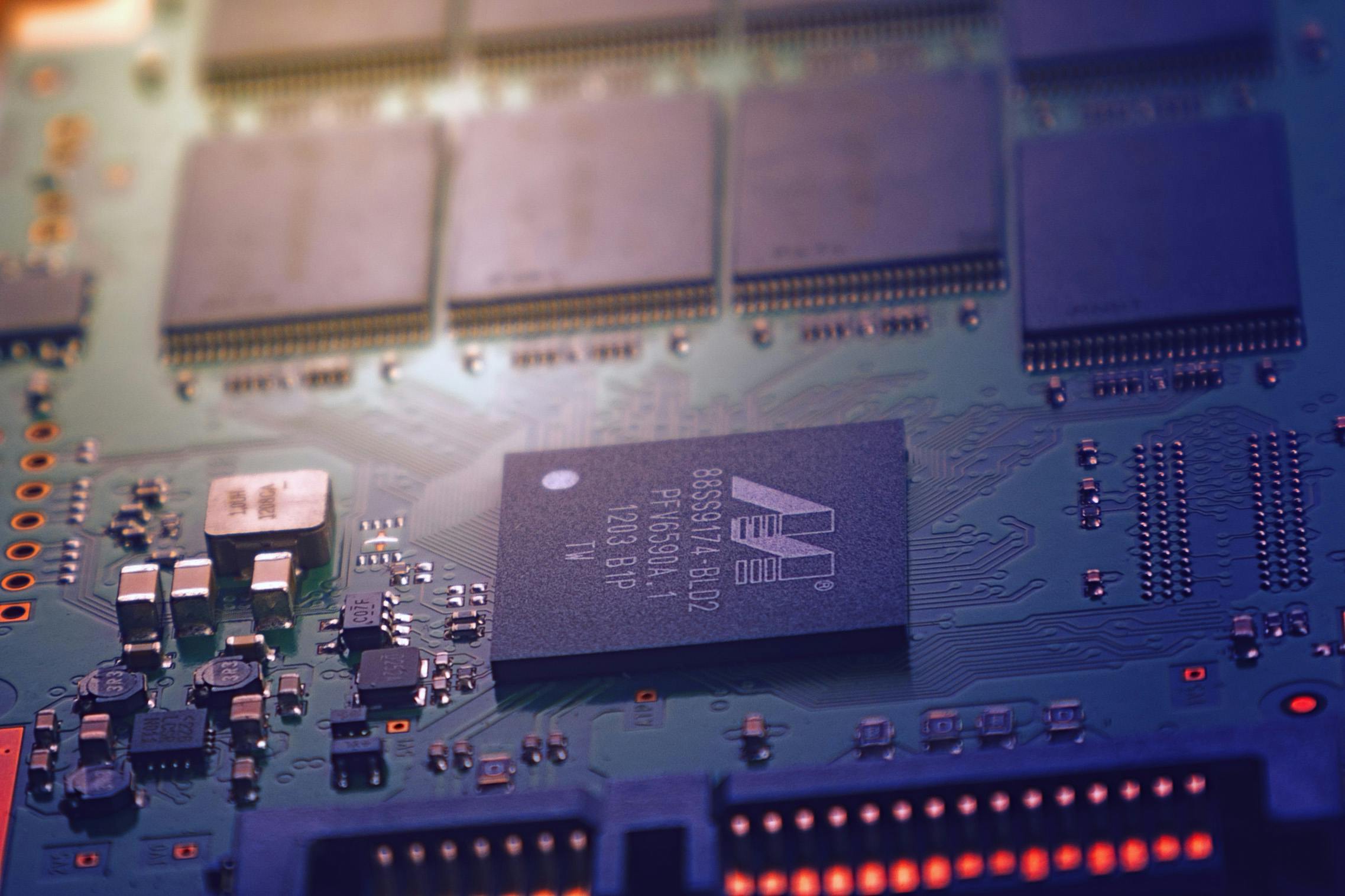
As Vietnam’s supporting industries rapidly evolve and modernize, mastering photopolymerization technology is absolutely essential to seamlessly join the highly demanding global supply chain. Advanced industrial UV curing systems are not merely simple lighting devices; they are complex, high-tech engineering setups that require deep technical understanding to optimize. Below, the engineering experts at COUSZ provide detailed answers to the most common questions regarding the operation, safety, and integration of industrial UV curing systems.
1. What UV curing system product lines does COUSZ offer?
To perfectly meet the diverse manufacturing requirements of various enterprises, COUSZ has researched and developed a massive ecosystem of specialized curing formats – Industrial UV Curing System. Depending on your production volume and specific component geometry, you can select from the following configurations:
1.1. UV conveyor systems
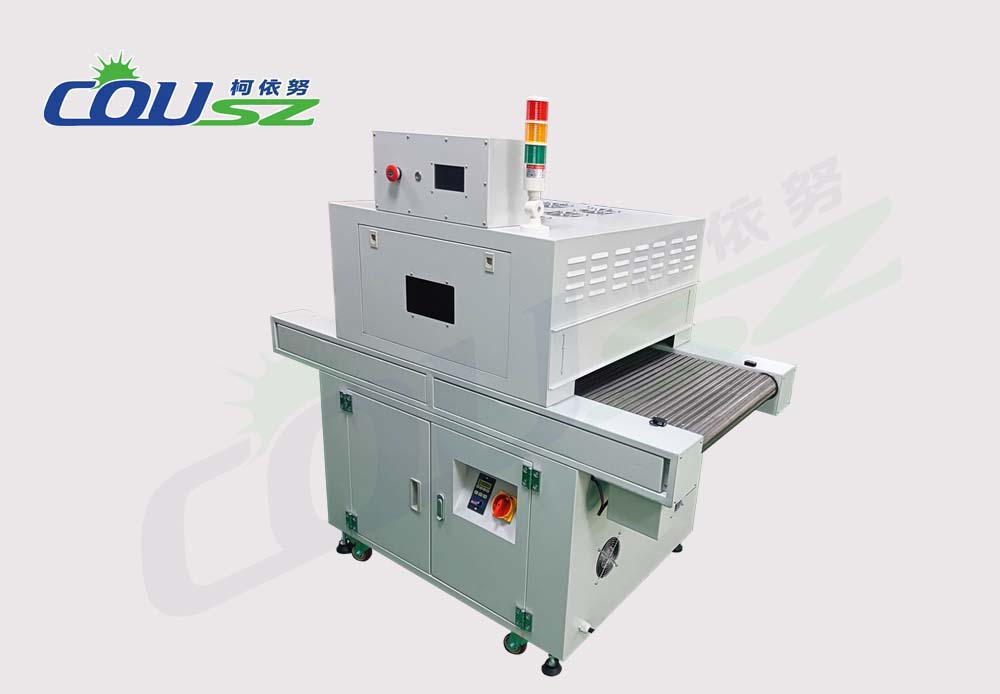
This is the universally accepted solution for high-volume, continuous production lines. Products are placed directly on a specialized, UV-resistant conveyor belt and pass through an intense irradiation chamber at a highly stable, controlled speed. This system allows for seamless integration into fully automated manufacturing environments.
1.2. UV curing ovens
These enclosed units are perfectly suited for batch processing workflows. A sealed curing oven provides a highly controlled, enclosed space that ensures absolute light intensity management while perfectly protecting the human operator from any stray radiation leakage.
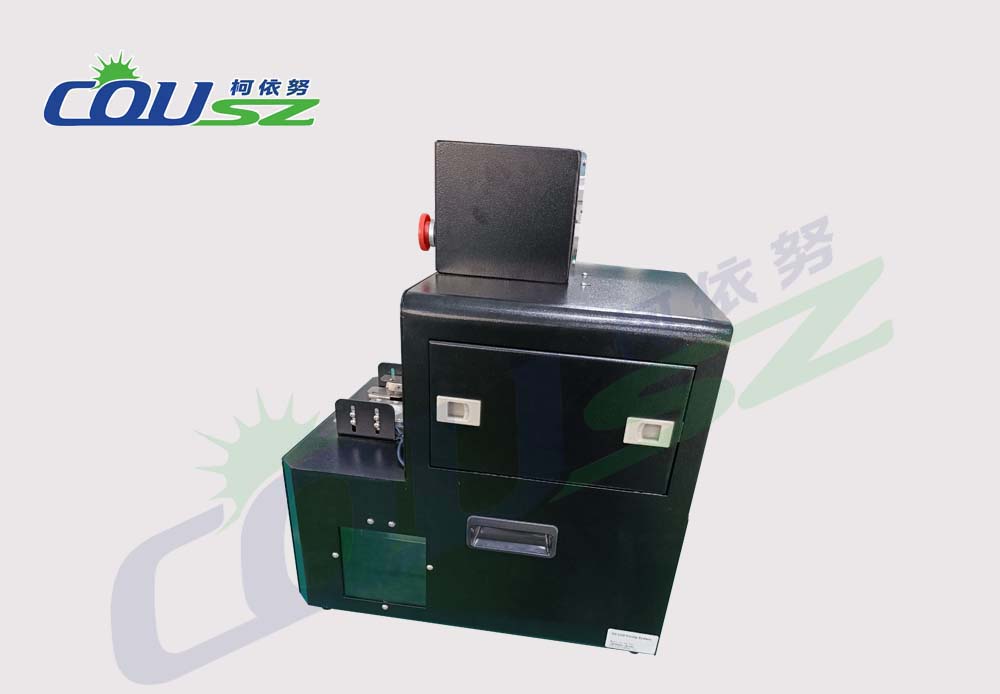
1.3. Industrial UV curing systems
These are massive, high-capacity industrial UV curing systems specifically engineered to operate flawlessly 24/7 in the most grueling factory environments. These robust setups typically incorporate advanced water cooling (Chiller) systems to maintain peak LED chip performance over tens of thousands of hours.
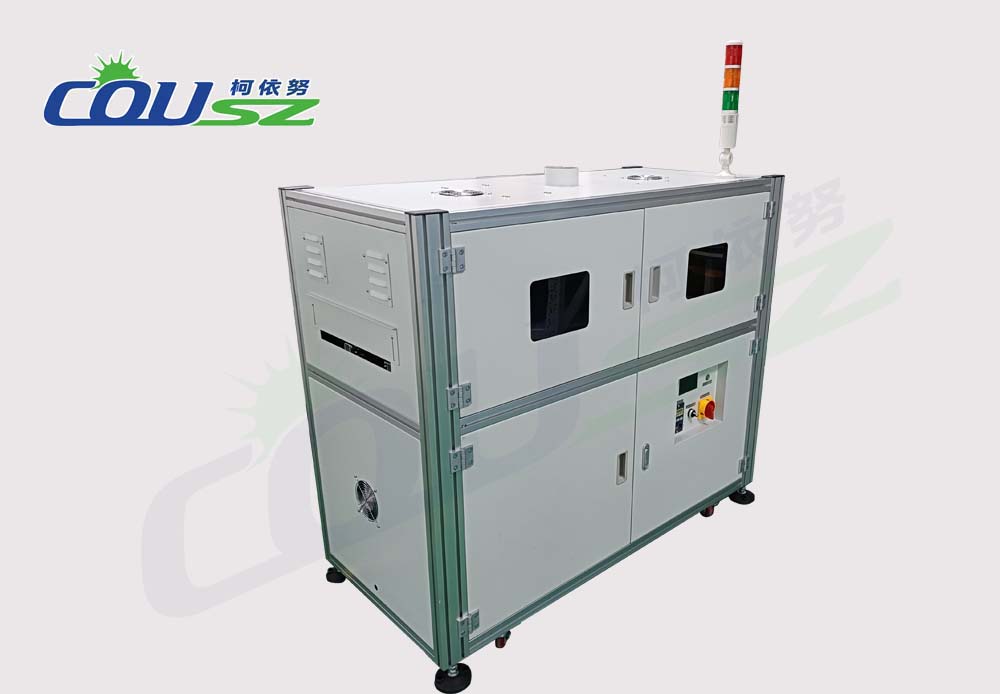
1.4. UV line curing systems
Specifically designed to cure long, continuous lines of adhesive. This format is heavily utilized in fiber optic cable manufacturing, gasket sealing, or the assembly of large solar panel arrays.

1.5. UV flood curing systems
Flood systems deliver a massively wide, uniform blanket of high-intensity light. This particular machine format is extraordinarily effective when you need to cure massive surface areas simultaneously, such as LCM screens, LCD panels, or large sheets of tempered architectural glass.
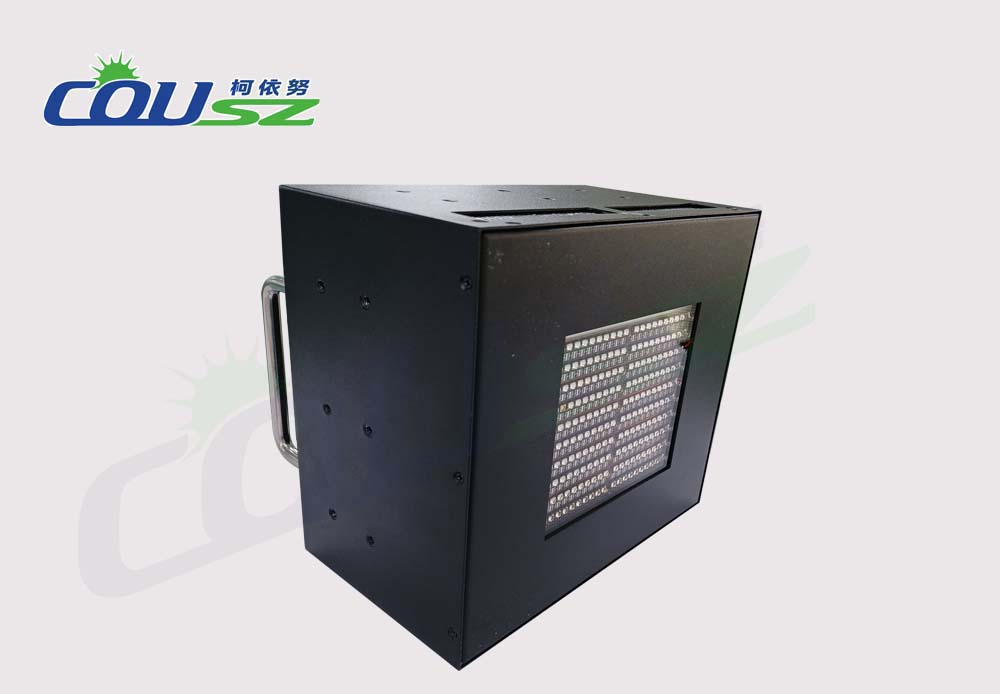
1.6. Uv spot curing systems
The absolute number one choice for tasks demanding extreme micro-precision, such as smartphone camera module assembly, bonding medical syringe needles, or fixing semiconductor components. The intense light is channeled directly through flexible fiber optic cables to a microscopic focal point with ultra-high radiation intensity.
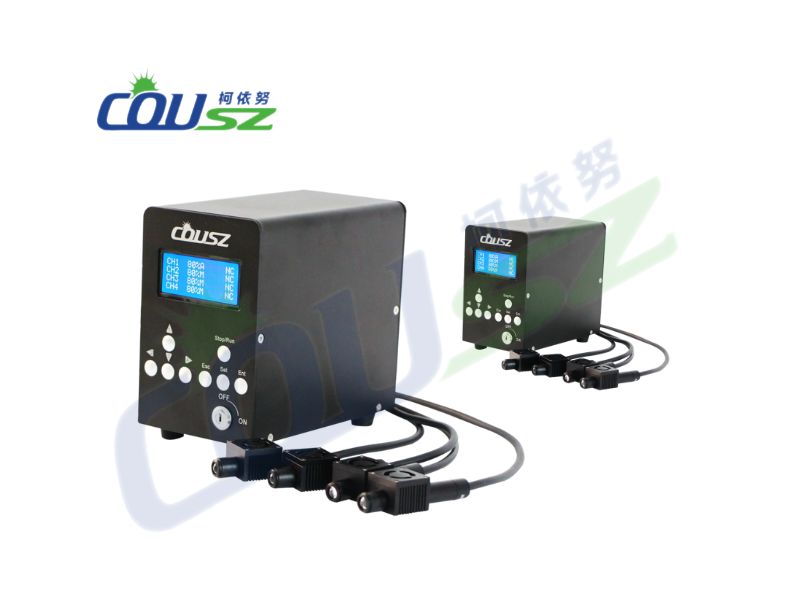
2. Industrial UV Curing System – Are UV curing systems safe to use?
The short and definitive answer is: Yes, absolutely—provided they are operated correctly and utilize modern technology.
The safety of industrial UV curing systems is generally divided into two distinct categories:
- Health safety (Radiation exposure): High-intensity UV-A radiation (commonly used for curing adhesives) can be harmful to human eyes and skin upon direct exposure. However, modern industrial UV curing systems from COUSZ are heavily equipped with premium light-shielding cabinets and automated safety interlock systems that instantly shut off the LED arrays the microsecond a chamber door is opened.
- Environmental safety (Ozone generation): Unlike traditional, outdated mercury vapor lamps that generate highly toxic Ozone gas (which legally requires expensive, complex exhaust ventilation), COUSZ’s UV LED curing technology operates at very specific, narrow wavelengths that generate zero Ozone. According to ISO 14001 environmental standards, transitioning to LED technology drastically improves the breathing environment inside enclosed factory spaces.
3. What types of materials can be cured by UV curing systems?
The application scope for industrial UV curing systems is remarkably vast, covering nearly every modern manufacturing sector. The primary compatible materials include:
- UV adhesives: Extensively utilized to create unbreakable bonds between glass-to-metal or plastic-to-plastic in the highly regulated medical device and electronics industries.
- UV inks: Used for high-speed printing on non-porous polymer films, flexible plastic packaging, thick glass bottles, and raw metal sheets.
- UV coatings: Applied as protective conformal coatings on delicate circuit boards, high-gloss finishes on wooden furniture, or scratch-resistant layers on vinyl flooring.
- Substrates: Ranges from highly heat-sensitive plastics like PET, PVC, and thin polycarbonate, all the way to incredibly durable surfaces like aluminum, stainless steel, and industrial ceramics.
According to comprehensive market research from Grand View Research, this incredible flexibility in material compatibility is the primary driving force behind the market’s explosive growth, with a projected CAGR of 12.5% leading up to the year 2030.
👉 Discover how to maximize your material yield:
UV Curing Technology: How Manufacturers Increase Productivity and Cut Operating Costs
4. Other common questions about UV curing technology (Reference): Other question REF:
4.1. What is the standard stand-off distance for UV curing?
The stand-off distance (the physical gap between the lamp lens and the glue surface) is a highly critical parameter that directly dictates the peak irradiance (mW/cm²) received by the product.
- Standard range: Typically fluctuates between 5mm and 40mm depending on the optics.
- The physics: Light intensity degrades dramatically according to the inverse square law of distance. According to rigorous testing in the COUSZ engineering labs, increasing the curing distance from 10mm to just 20mm can plummet the useful radiation intensity by 40% to 50% due to natural beam divergence.
To combat this severe optical loss, COUSZ engineers equip our machines with highly specialized convergent quartz lenses. These lenses maintain a tightly focused column of energy, allowing for slight variations in distance when curing products with highly complex, uneven 3D geometries.
4.2. How is UV LED output uniformity maintained across wide formats?
For wide-format industrial UV curing systems used in massive printing or coating lines, maintaining optical uniformity is the ultimate engineering challenge. If the energy output is uneven, the final product will suffer from terrible “wet spots” and inconsistent curing.
COUSZ Industrial UV Curing System actively resolves this complex issue through three methods:
- Matrix chip management: We arrange the individual LED diodes in a tightly woven, staggered matrix structure to physically eliminate any optical dead zones.
- Optical lenses: Utilizing advanced TIR (Total Internal Reflection) optics perfectly redirects the scattered photons, guaranteeing an energy uniformity rate exceeding 90% across the entire width of the massive conveyor belt.
- Active monitoring: Built-in intelligent sensors instantly detect if a specific LED chip begins to degrade, allowing the PLC to automatically boost power to surrounding chips to compensate instantly.
4.3. How do UV LED systems compare to medium-pressure arc lamps?
A massive point of confusion among factory managers is conflating raw electrical consumption (Watts) with actual, useful ultraviolet radiation (mW/cm²).
- Medium-pressure arc lamps (Mercury): These consume a staggering amount of electricity (e.g., 200W/cm), yet their actual conversion efficiency into useful UV light is a dismal 20% to 25%. The vast majority of your expensive electricity is entirely wasted, converted into destructive infrared heat and useless visible light.
- UV LED technology: While drawing significantly lower electrical power, their direct conversion efficiency into targeted UV light reaches an astonishing 40% to 50%.
When evaluating industrial UV curing systems, you must always compare the actual accumulated energy (UV Dose – mJ/cm²) delivered to the adhesive. A highly optimized 10W LED system can easily match the chemical curing performance of a massive 100W mercury lamp if the specific wavelength perfectly matches the glue’s photoinitiators.
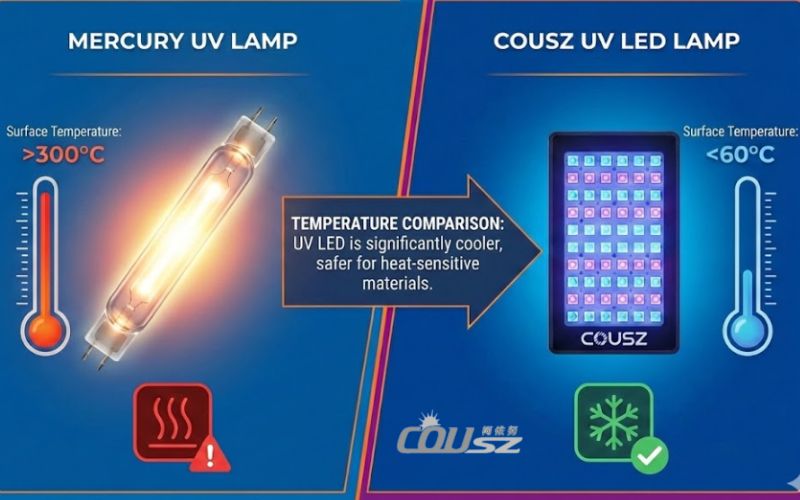
4.4. How much cooler is UV LED compared to traditional curing?
UV LED is universally referred to in the industry as a “cold light source” because it fundamentally does not emit infrared (IR) wavelengths—the primary culprit behind the intense, burning heat generated by outdated mercury bulbs.
| Technology Type | Surface Temperature on Product | Impact on Heat-Sensitive Materials |
|---|---|---|
| Traditional Mercury Lamp | 80°C – 150°C | High risk of melting, severe warping, and discoloration. |
| COUSZ UV LED System | 35°C – 45°C | Perfectly safe. Zero thermal distortion or structural damage. |
New heat-sensitive materials can now be processed using COUSZ industrial UV curing systems, including ultra-thin plastic films (PET, BOPP), highly sensitive CMOS camera sensors that warp under heat, and advanced biometric thermal papers that would turn completely black inside a traditional oven.
4.5. Is it difficult to switch wavelengths for different products?
With COUSZ’s highly modular architecture, switching operational wavelengths is incredibly simple. A factory technician can completely swap out a lamp head (for instance, transitioning from a 365nm deep-cure module to a 395nm surface-cure module) in under 15 minutes.
Furthermore, Hybrid Systems are becoming a massive industry trend. Factories utilize UV LED for rapid “through-curing” due to its excellent optical penetration, while simultaneously using a small mercury lamp for a rapid “surface-cure” to defeat oxygen inhibition (the chemical phenomenon that leaves the very top layer of glue feeling slightly sticky). This hybrid approach maximizes the unique strengths of both technologies.
4.6. What control functions are available on UV LED curing systems?
Our advanced systems are designed for deep, seamless integration with your factory’s main PLC via standard RS485/Modbus communication protocols.
- Precision control: Operators can digitally adjust the optical intensity from 1% to 100% and dial in the precise curing exposure time down to 0.1 seconds.
- Instant ON/OFF cycling: This is the absolute greatest advantage of LED technology. You can trigger the lights on and off millions of times without degrading the chip’s lifespan. This heavily conserves electricity whenever the conveyor belt temporarily pauses.
- Self-diagnostics: The internal CPU continuously monitors the LED junction temperature and electrical input current, instantly triggering an alarm if the radiation intensity drops below your strict quality control threshold.
4.7. How is the ROI calculated for industrial UV curing systems?
Because the initial capital investment for modern industrial UV curing systems can be 30% to 50% higher than buying old arc lamps, financial controllers heavily rely on the Return on Investment (ROI) metric. In practical factory settings, full ROI is typically achieved in just 12 to 18 months based on four massive financial pillars:
- Massive electrical savings: Directly slashing the monthly electricity bill by 70% by eliminating mandatory warm-up times and utilizing high-efficiency semiconductors.
- Zero maintenance overhead: Completely eliminating the costly cycle of buying and replacing shattered mercury bulbs every 1,000 hours. A solid-state LED operates flawlessly for up to 30,000 hours.
- Increased factory throughput: The incredibly rapid photopolymerization speed allows you to crank up the conveyor belt speed, drastically increasing your total hourly product yield.
- Slashed defect rates: Absolute temperature control totally eliminates incredibly expensive product rejects caused by thermal warping or melting.
5. Conclusion: Master your manufacturing process with Industrial UV Curing System
Transitioning from outdated thermal ovens to precision photopolymerization is the ultimate step in factory modernization. Investing in premium industrial UV curing systems is a highly strategic move that guarantees superior product quality, massive energy reductions, and total compliance with strict international manufacturing standards.
Explore the full, detailed technical manuals and discover exactly how COUSZ machinery can perfectly integrate into your unique production workflow today.
6. Contact our engineering experts for Industrial UV Curing System Consultation
Are you actively seeking the ultimate optimization solution for your automated assembly line? Looking for top-tier industrial UV curing systems for your line? Let the highly experienced engineering team at COUSZ assist you with a free technical audit:
👩💼 Consultation Expert: Ms. Yuna
📞 Tel/Whatsapp/Wechat/Zalo: (84) 965 535 348
📧 Email: sales03@cousz.com
🌐 Website: cousz-vn.com
🏢 Address: Ngo Xa Village, Phat Tich Commune, Bac Ninh Province, Vietnam.