中文 (中国)
 Tiếng Việt
 한국어
한국어

1. Guide to choosing the right measurement equipment for your business
Investing in optical measurement equipment is not simply buying a tool; it is purchasing an absolute insurance policy for your product quality. However, navigating the complex matrix of currently available devices to find a solution that saves costs while meeting strict technical demands is a major headache for production managers.
To establish a flawless foundation, you must carefully evaluate several parameters. For more detailed insights on selection criteria, please refer to our comprehensive uv meter guide online: Guide to Choosing the Right UV Meter for Your Business.
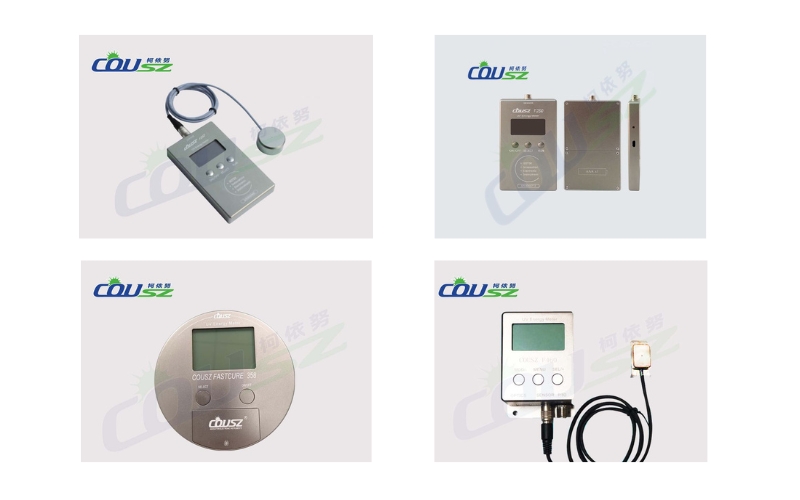
1.1. Determine the light source: mercury or led uv?
This is the absolute prerequisite criterion. Traditional Mercury lamps emit a broad, multi-wave spectrum (UVA, UVB, UVC), whereas modern LED UV systems emit a highly concentrated, narrow band (such as 365nm or 395nm). According to extensive research published by RadTech International, utilizing a traditional broadband radiometer to measure a narrow-band LED lamp can cause catastrophic reading errors of up to 40%. Therefore, if your enterprise utilizes LED technology, you must choose the right UV meter that features specialized narrow-band optical filters.
1.2. Conveyor belt or manual curing station?
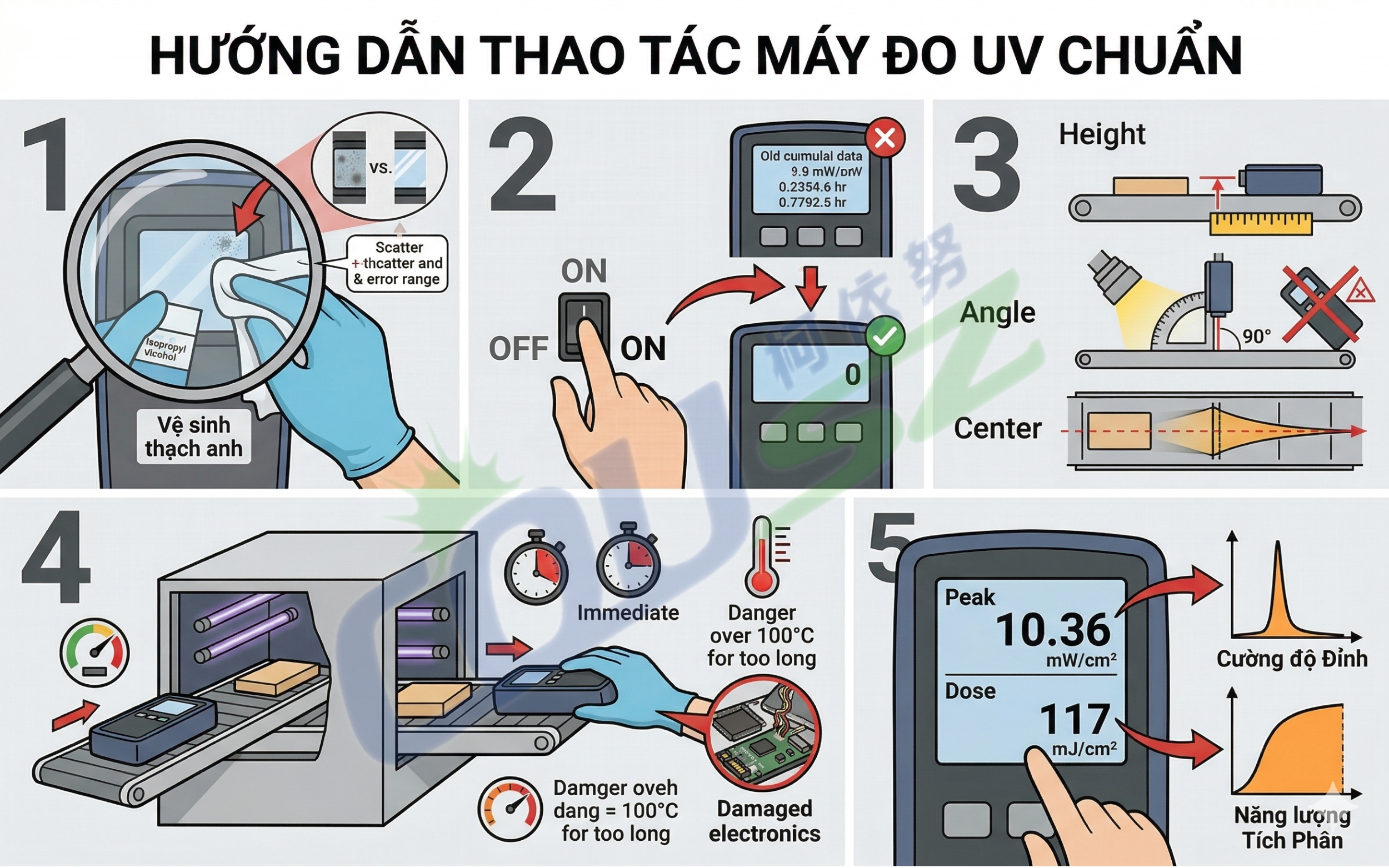
- For conveyor ovens: You must utilize “puck” style integrators (disc-shaped meters) that can physically travel through the high-temperature drying chamber to continuously record the accumulated UV energy density (mJ/cm²).
- For spot or manual stations: The selection should pivot toward flexible handheld devices equipped with detachable probes, allowing technicians to easily maneuver and measure within tight, restricted spaces.
1.3. What parameters do you need to measure?
A standardized metrology device must clearly display both Peak Irradiance (mW/cm²) and accumulated Dose. To establish a truly comprehensive control system, you must choose the right UV meter that features advanced power curve graphing capabilities, allowing you to visualize the exact light distribution footprint inside the high-temperature oven.
2. Top 4 models to explore in this uv meter guide
After grasping the foundational selection principles, let us explore the models currently dominating the industrial market due to their exceptional durability and high UV measurement accuracy.
To dive deeper into the specific specifications of these instruments, read about the Top 4 Popular UV Meter Models on the Market Today.
2.1. Uv power puck ii (the industrial gold standard)
This is a legendary multi-channel radiometer capable of measuring UVA, UVB, UVC, and UVV simultaneously. If your enterprise operates multiple different types of lamps across various production lines, this is the ultimate investment for centralized, single-device management.
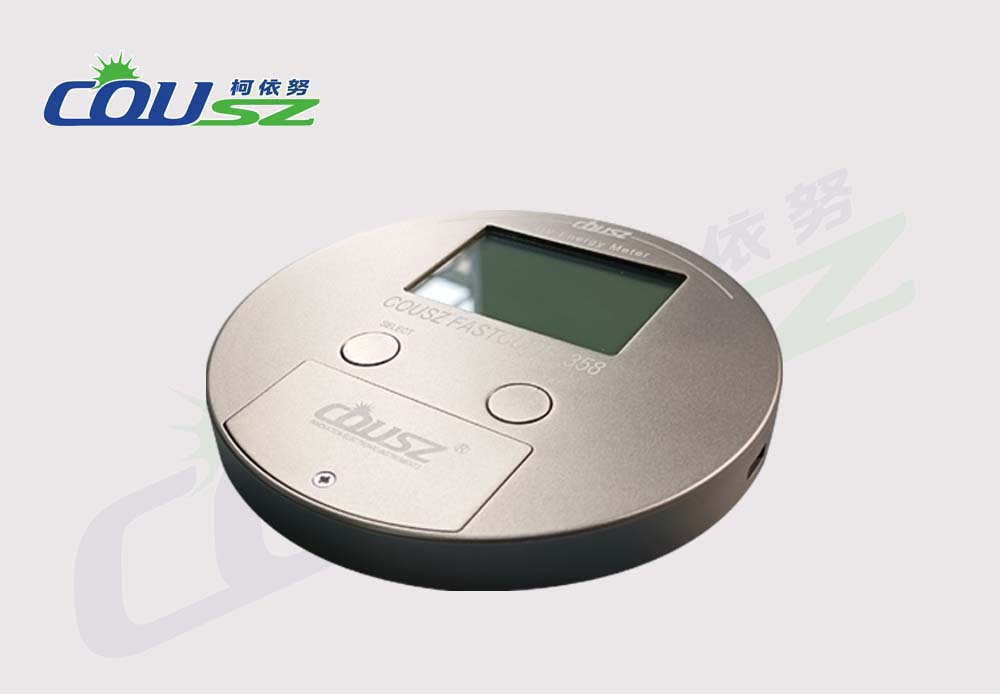
2.2. Fastcure 150 (f150) series
Renowned for its ultra-thin profile and excellent UV energy density tracking specifically tailored for traditional Mercury lamps. With a moderate budget requirement, this is an incredibly economical and reliable choice for large-scale packaging printing factories.
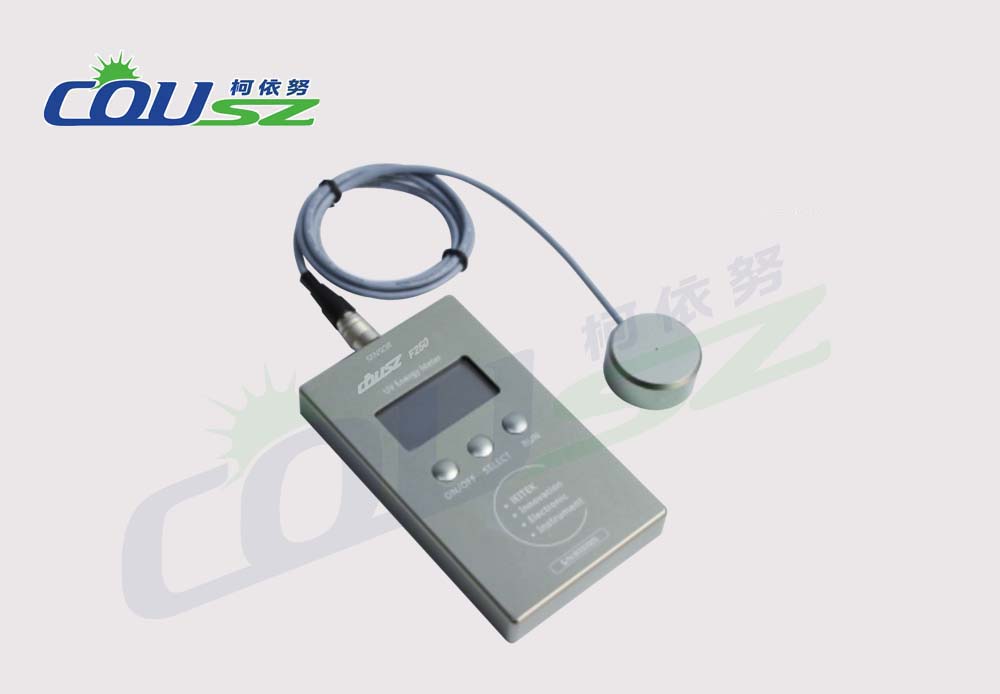
2.3. F250 series (flexible handheld device)
Equipped with a highly sensitive, detachable φ35mm probe, the F250 is the perfect recommendation for Research & Development (R&D) departments or for inspecting manual handheld curing lamps. It measures real-time power, accumulated energy, and dynamic temperature concurrently.
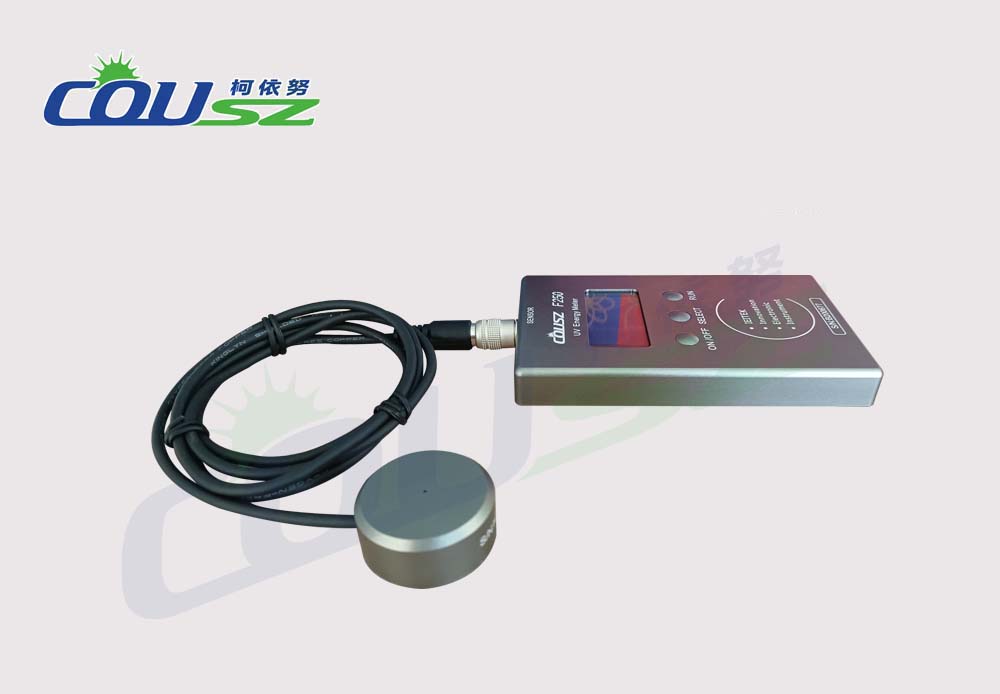
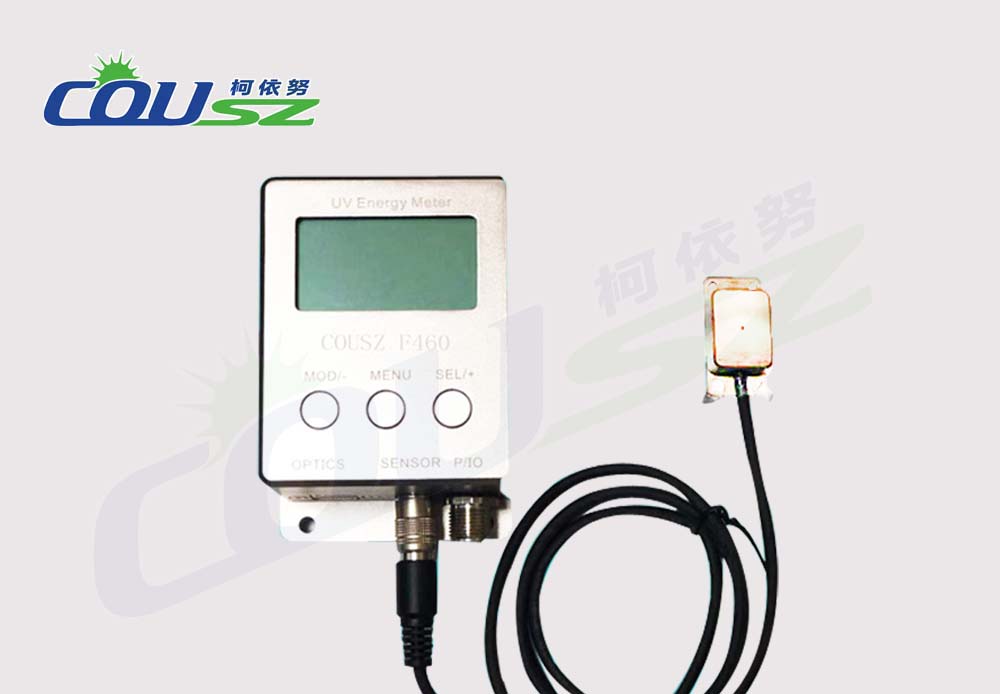
2.4. F460 series (24/7 online monitoring)
Designed strictly for fully automated, Industry 4.0 production lines. The F460 connects directly to a central PLC via an RS485 communication port for uninterrupted 24/7 monitoring. This is the most modern approach to preventing scrap products the exact moment a lamp begins to degrade.
3. Factors affecting accuracy: why do measurement deviations occur?
Even if you utilize the absolute best equipment recommended in a uv meter guide, your data will be fundamentally flawed if you blindly ignore critical physical and environmental variables.
Learn more about preventing these disastrous issues in our technical brief: Factors Affecting UV Measurement Accuracy: Why Do Measurement Deviations Occur?
3.1. Spectral response compatibility
Severe deviations frequently occur when the meter’s internal optical filter is not “sensitive” to the specific emission wavelength of the lamp. For instance, a meter calibrated for the UVA band (365nm) will yield an artificially low result if used to measure a 395nm LED array. Always scrutinize the technical data sheet of your lamp before you choose the right UV meter for your facility.
3.2. Temperature – the ultimate enemy of sensors
Optical semiconductor sensors are drastically impacted by extreme heat. According to foundational research by Professor R.W. Stowe, excessive temperatures inside the curing oven cause significant “Sensor Drift,” permanently skewing the data. If your device lacks an integrated thermal shield, you must allow it to cool completely between passes to maintain UV measurement accuracy.
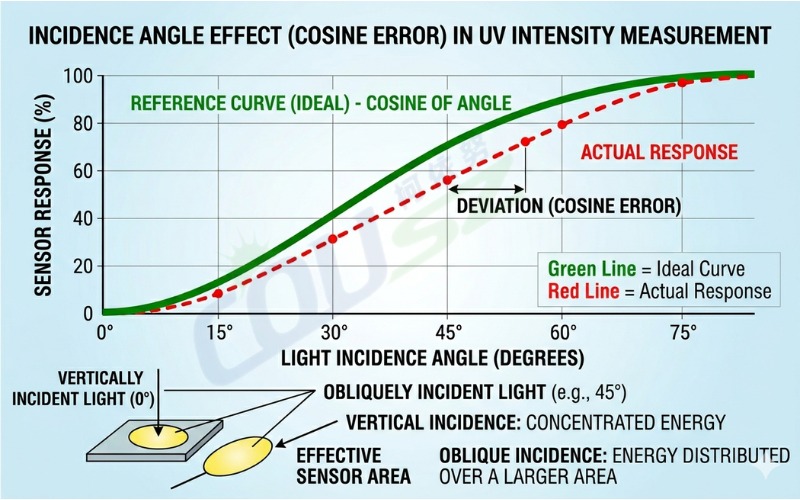
3.3. Cosine response (angle of incidence)
If ultraviolet light strikes the sensor at a skewed, oblique angle, the machine will register a result much lower than reality. High-end devices feature specialized diffusing lenses designed to minimize this physical error. Prioritizing instruments with excellent Cosine response is a mandatory step in building a reliable uv meter guide for your technicians.
4. Periodic testing and strict calibration procedures
Every optical device suffers from unavoidable material degradation over time, known in the industry as Solarization. A strict 12-month calibration cycle is legally and technically mandatory in any professional uv meter guide.
- Establish a gold standard: Keep one brand-new, freshly calibrated unit safely stored away to act solely as a master reference point for the meters used daily on the harsh factory floor.
- Track the degradation curve: Log your measurement data meticulously every week. If the displayed results suddenly drop by more than 10% despite the lamp remaining unchanged, it is time to seek professional calibration to restore your UV measurement accuracy.
At COUSZ Vietnam, we do not merely sell hardware; we provide certified NIST-traceable light source calibration services, ensuring your metrology equipment remains in a state of absolute perfection.
5. Secrets to avoid wasting money on your procurement
Optimize your factory’s budget by adhering to these three golden rules of procurement, which form the core of our practical uv meter guide:
- Do not overbuy features: If your facility only cures 365nm adhesives, purchasing a highly expensive 4-channel multi-band meter is an unnecessary waste of capital.
- Do not buy excessively cheap: Low-cost, generic meters found on e-commerce platforms completely lack standardized optical filters; their displayed numbers are merely illustrative and possess zero scientific value.
- Select a highly technical supplier: The smartest purchasing decision involves partnering with a supplier capable of supporting on-site factory trials and providing immediate spare parts during sudden breakdowns.
6. Contact cousz for professional metrology consultation
Are you still struggling to finalize your choices after reading this uv meter guide, or trying to find a solution that perfectly aligns with both your budget and technical requirements? The expert engineering team at COUSZ Vietnam is fully prepared to support you 24/7 with the most professional service available in the industry:
👤 Ms. Yuna
✨ Technical & Sales Representative – COUSZ Vietnam
📞 Tel/Whatsapp/Wechat/Zalo: (84) 965 535 348
📧 Email: sales03@cousz.com
🌐 Website: www.cousz-vn.com
7. Faqs – frequently asked questions about uv measurement
7.1. How do i know if my meter supports led lamps?
Check the physical wavelength markings printed on the device’s casing. If the meter features a “UVV” channel or specifies a spectral range of 380-440nm, it is fully capable of accurately measuring 395nm or 405nm LED systems. Verifying this is the first step in a proper uv meter guide protocol.
7.2. Why do two different brands show different results for the exact same lamp?
This discrepancy occurs because every manufacturer utilizes a proprietary optical filter design and a slightly different internal calibration standard. A deviation of 5-10% between distinct brands is entirely normal in optical physics. The absolute key is to select one highly reputable brand and use it uniformly across your entire QC process to maintain consistent UV measurement accuracy.
7.3. Should i purchase a second-hand (used) uv meter?
Exercise extreme caution. Ultraviolet sensors possess a finite “photon lifespan.” A used machine may suffer from severe sensor solarization that is invisible to the naked eye. If you must buy used, you must demand that the seller provides a certified calibration document dated within the last 3 to 6 months.
7.4. Is uv energy density (mj/cm2) or irradiance (mw/cm2) more important?
Both parameters are critically important, but the accumulated UV energy density (mJ/cm²) is the definitive factor that dictates whether the polymer chains in the adhesive have completely cross-linked and dried. The most superior devices will clearly display both values simultaneously on a single screen.
7.5. Does cousz support on-site factory trial measurements?
Absolutely. We deeply understand that the best way to solidify your knowledge from this uv meter guide through direct, practical experience. COUSZ fully supports bringing our advanced equipment directly to your manufacturing floor for hands-on trial measurements and rigorous data comparison before you finalize any purchasing decision.