中文 (中国)
 Tiếng Việt
 한국어
한국어
In the rapidly evolving landscape of smart manufacturing in 2026, mastering how to operate and maintain UV curing systems is the ultimate key to guaranteeing equipment longevity and flawless product quality. At COUSZ Vietnam, our extensive field data reveals a startling fact: over 60% of catastrophic LED chip failures stem directly from improper operational procedures rather than inherent manufacturing defects. This comprehensive article delivers an in-depth roadmap, covering startup protocols, routine preventative upkeep, and global safety standards, empowering your enterprise to optimize production workflows and maximize hardware lifespan.
1. How can you effectively operate and maintain equipment from a to z?
To successfully operate and maintain UV curing systems, factory technicians must strictly adhere to precise optical and thermal specifications to ensure the chemical polymerization reaction occurs completely. According to profound photochemistry research published by Dr. R.W. Stowe, a leading expert associated with global UV systems, two fundamental metrics—Irradiance (Peak Intensity) and Energy Density (Dose)—must be rigorously and continuously monitored.
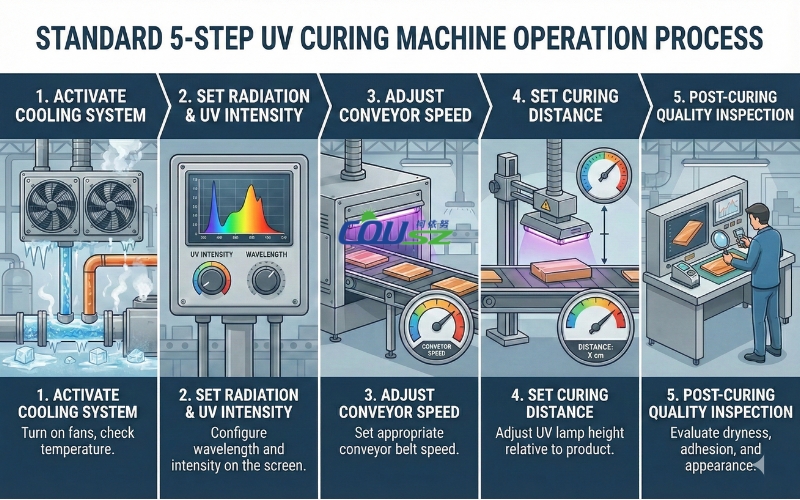
1.1 Step 1: Pre-start inspection protocols
Before initiating any industrial UV LED equipment, the operator must physically audit the thermal management subsystem (whether water-cooled or air-cooled). If your facility utilizes a water-chilled unit, verify that the coolant reservoir is full, the liquid is free of scale, and absolutely no microscopic air bubbles are trapped within the circulation pipes. A minor blockage restricts flow, causing the semiconductor LED junction temperature to violently spike past the critical 80°C threshold, resulting in permanent, irreversible diode burnout.
1.2 Step 2: Configuring technical parameters
Every specific chemical adhesive or industrial ink possesses a unique wavelength “sweet spot” (typically 365nm, 385nm, or 395nm). You must digitally configure the output power (adjustable from 10% to 100%) on the PLC interface to perfectly synchronize with your conveyor belt speed. To guarantee the UV adhesive curing process is successful, we strongly mandate utilizing a calibrated radiometer to empirically measure and confirm the actual photon energy striking the substrate’s surface.
1.3 Step 3: Executing the curing workflow
Introduce the coated product into the irradiation zone. Pay extreme attention to the Working Distance—the physical gap between the quartz optical lens and the wet adhesive layer. According to the Inverse Square Law of physics, if you accidentally double the distance, the radiant intensity delivered to the product plummets by a factor of four. Therefore, establishing and mechanically locking in a highly stable working distance is the absolute core principle to operate and maintain UV curing systems effectively.
A Step-by-Step Guide to Using UV Curing Systems
2. What are the genuine maintenance and repair procedures?
Professional maintenance is not merely reacting when a machine breaks down; it is a highly calculated strategy to prevent the breakdown from ever occurring. A well-serviced COUSZ system is engineered to operate stably for over 10 years in harsh industrial environments.
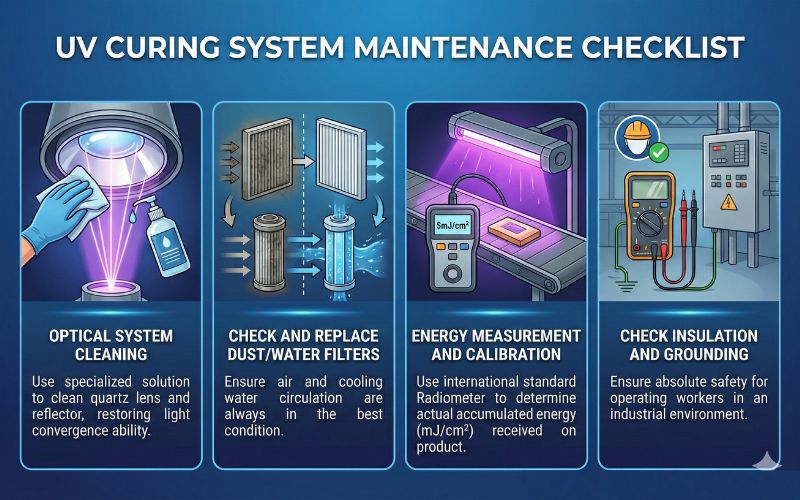
2.1 Daily routine maintenance tasks
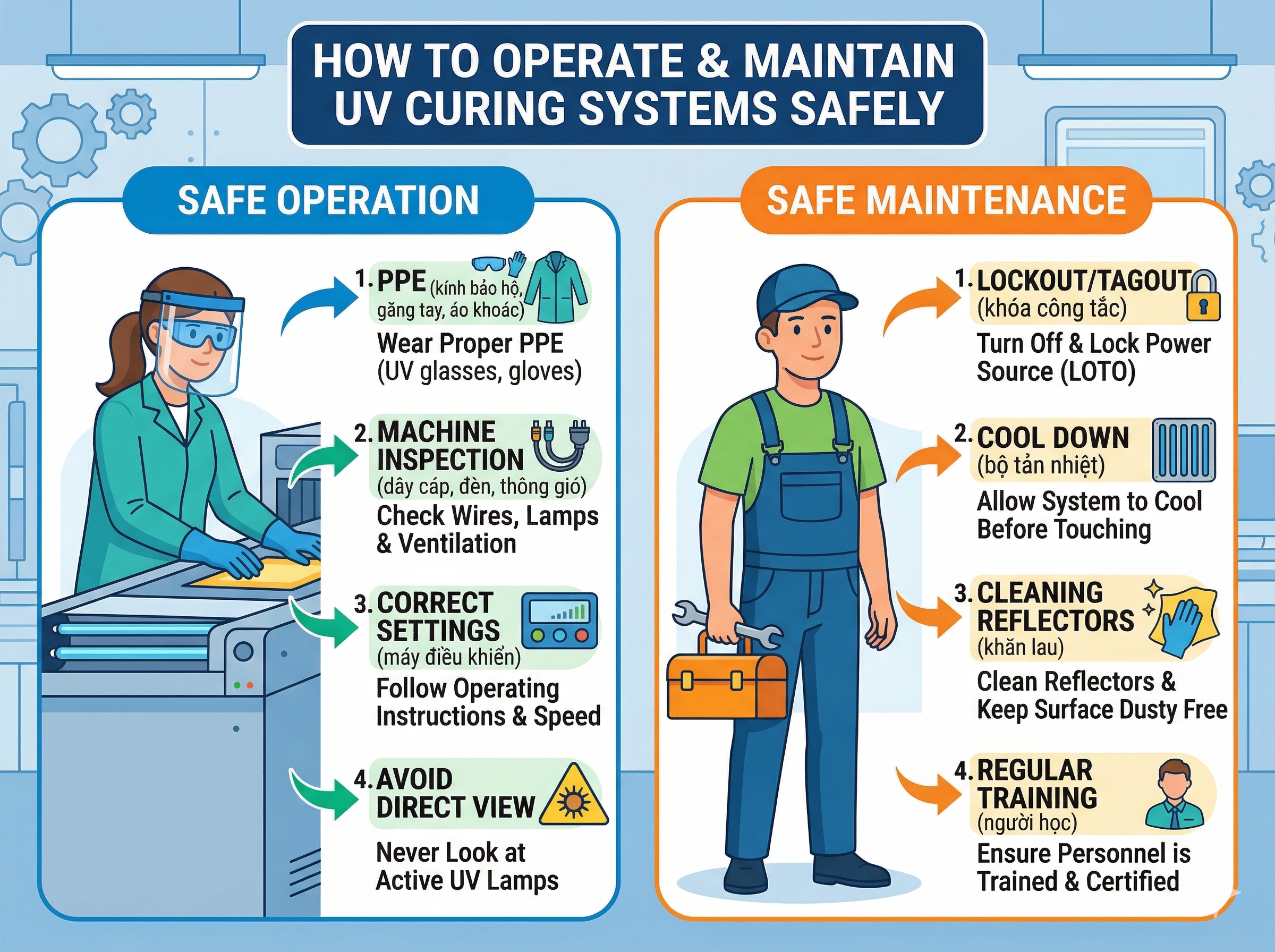
At the conclusion of every single production shift, the protocol to operate and maintain UV curing systems strictly dictates cleaning the quartz emitting lens. Industrial dust and vaporized adhesive outgassing adhere to the lens surface. If left uncleaned, this contamination absorbs the ultraviolet light, converting it into trapped thermal energy, which ultimately cracks the expensive quartz glass. Operators must use high-purity Isopropyl Alcohol (IPA >90%) and a specialized lint-free cleanroom wipe to gently clean the optics.
2.2 In-depth monthly maintenance checks
- Cooling fan inspection: Utilize compressed air to rigorously blow out accumulated dust blocking the heatsink fins of your industrial UV LED equipment.
- LED degradation tracking: Deploy your radiometer to compare the current peak intensity against the baseline recorded on the installation date. If the output has degraded by more than 30%, you must actively consider a module replacement to prevent compromising the UV adhesive curing process.
- Signal cable integrity: Physically inspect the heavy-duty aviation connectors to ensure they have not vibrated loose or oxidized due to ambient factory humidity.
Adhering strictly to these preventative regimens drastically slashes sudden machine downtime. According to a comprehensive manufacturing report by Deloitte, unplanned downtime can cannibalize up to 15% of a factory’s total production budget.
Complete Maintenance and Repair Solutions for UV Curing Systems
3. How to diagnose common errors and apply quick fixes?
Even with meticulous care, anomalies occur. A highly effective UV curing troubleshooting guide is vital for process engineers to react swiftly.
| Observed Symptom | Most Probable Cause | Immediate Action / Solution |
|---|---|---|
| Lamp entirely dead | Power supply failure or severed IO signal cable. | Inspect the digital Driver unit; test cable continuity with a multimeter. |
| Glue remains sticky | Weak irradiance or mismatched chemical wavelength. | Recalibrate energy with a radiometer; slow down the conveyor belt. |
| Thermal alarm triggers | Cooling system failure or heavily clogged filters. | Inspect chiller pump flow; blow out cooling fans; replace dust mats. |
| Light flickers wildly | Severe electrical voltage instability in the factory grid. | Install a heavy-duty industrial voltage stabilizer; audit Driver output. |
In every complex scenario, the ultimate rule when you operate and maintain UV curing systems is to completely sever the main electrical power before opening any chassis to prevent lethal shock or accidental radiation exposure.
What Are the Most Common Issues When Operating UV Curing Systems?
4. What are the critical safety notes for protecting eyes and skin?
Absolute personnel safety is the undisputed number one priority. High-intensity ultraviolet radiation—especially short wavelengths like UVC or hyper-concentrated UVA from solid-state LED arrays—possesses the sheer photon energy required to inflict immediate, severe damage to biological tissue.
4.1 Eye protection standards
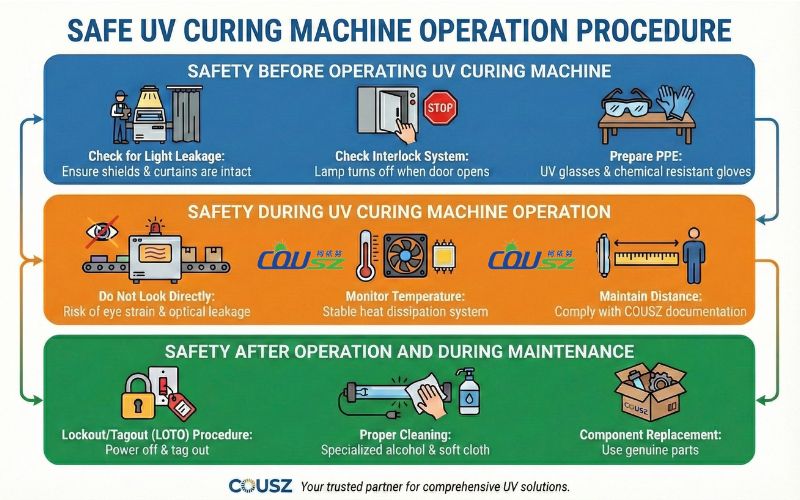
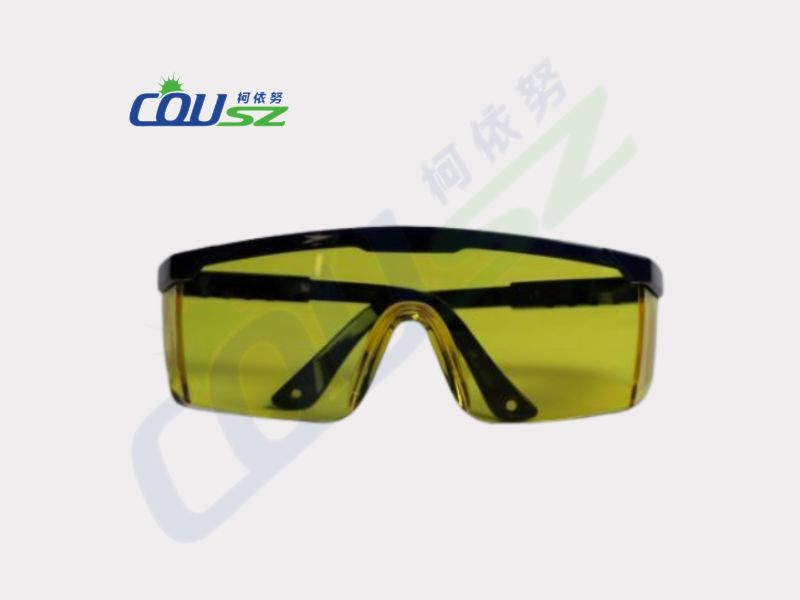
Directly staring into an active optical array can cause painful photokeratitis (corneal inflammation) or permanently accelerate the development of cataracts. Safe operational protocols dictate that all personnel within the vicinity must wear specialized UV-blocking safety glasses that strictly adhere to the ANSI Z87.1 industrial standard. Warning: Standard commercial sunglasses are utterly useless against industrial-grade optical power.
4.2 Skin protection and shielding
Ultraviolet light induces severe chemical burns resembling rapid, extreme sunburns. Operators must wear long-sleeved, tightly woven clothing and chemical-resistant nitrile gloves to prevent dermal exposure. Within modern automated lines, the physical integration of dark acrylic or black aluminum shielding curtains is an absolutely non-negotiable step to safely operate and maintain UV curing systems.
4.3 Emission control for legacy systems
If your enterprise still relies on outdated mercury vapor lamps rather than modern industrial UV LED equipment, you face the severe added hazard of toxic Ozone (O3) gas generation. You must install massive, high-velocity exhaust ducting to prevent respiratory irritation among workers. Conversely, modern COUSZ LED systems completely eliminate ozone production, drastically simplifying your safety protocols.
Expert Advice: Always hard-wire magnetic Interlock sensors into your UV adhesive curing process. If an operator accidentally opens the curing chamber door, the interlock instantly severs power to the LED, protecting everyone nearby.
UV Curing Systems Safety Guide: Protecting Eyes and Skin from High-Intensity Radiation
5. Conclusion: Why is mastering these procedures crucial?
To successfully operate and maintain UV curing systems goes far beyond simply turning a machine on and off. It is a comprehensive discipline that protects multi-million-dollar capital investments while sustainably elevating final product quality. Investing heavily in continuous workforce training is equally as important as purchasing authentic, high-end hardware.
By strictly following a professional UV curing troubleshooting guide and respecting the intense photophysics of the UV adhesive curing process, your enterprise will dramatically slash defect rates, eliminate dangerous workplace accidents, and achieve unparalleled production efficiency.
6. Who to contact for expert technical support?
If your facility is struggling to establish bulletproof operational workflows, or if you need to schedule hands-on training to teach your assembly team how to operate and maintain UV curing systems according to global ISO standards, contact COUSZ Vietnam immediately.
👩💼 Senior Technical & Safety Consultant: Ms. Yuna 🌟
📞 Tel / WhatsApp / WeChat / Zalo: (84) 965 535 348
📧 Email: sales03@cousz.com
🌐 Website: cousz-vn.com
🏢 Headquarters: Ngo Xa Village, Phat Tich Commune, Bac Ninh Province, Vietnam
Faqs – Frequently asked questions
How often should I operate and maintain UV curing systems to ensure longevity?
Basic maintenance, such as wiping down the quartz emitting lens with IPA, must be performed daily after every shift. Deep technical maintenance, including radiometer calibration and thermal system flushing, should be executed thoroughly once a month.
Why does my industrial UV LED equipment alarm for high temperatures?
This typically indicates a critical failure in the cooling loop. Check if the air intake filters are choked with factory dust, or if the water chiller’s pump has failed to circulate liquid efficiently to the diode heatsink.
Can an incorrect UV adhesive curing process damage my product?
Yes. If the irradiance is set too high or the conveyor runs too slowly, the immense optical energy can literally burn the chemical photoinitiators, resulting in a brittle, discolored, and ultimately failed mechanical bond.